


SEJournal Online is the digital news magazine of the Society of Environmental Journalists. Learn more about SEJournal Online, including submission, subscription and advertising information.
May 13, 2026
 |
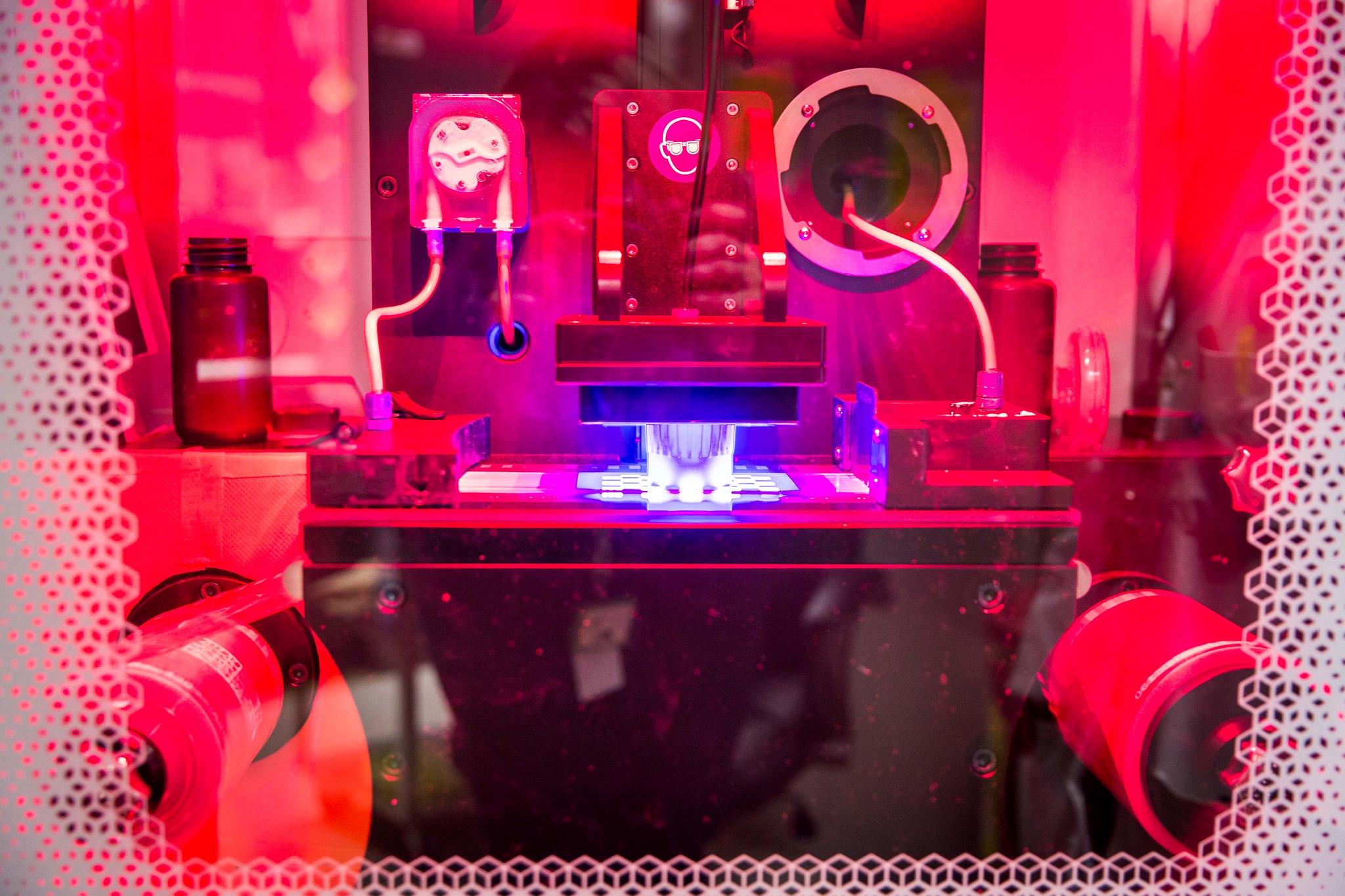 |
| R&D on small modular reactors and advanced reactors, above, is part of an effort to bring innovative design to nuclear power. Small modular reactors may be smaller, cheaper and more standardized. But are they safer? Photo: Canadian Nuclear Laboratories (CC BY-ND 2.0). |
Backgrounder: What Is the Half-Life of a Nuclear Revival? Part 2
[Editor’s Note: In Part 1, Backgrounder looked at the government’s part in developing nuclear power and why the new reactors built earlier in the 2000s didn’t really make the case for the industry’s rebirth.]
Part 2 of 2
By Joseph A. Davis
The ‘next generation’
Nuclear fission powered the Hiroshima bomb that killed and burned hundreds of thousands of people. The same technology generates steam and electricity in nuclear power plants. Most of the elaborate and expensive technology going into a nuclear plant is intended to keep it from turning into a bomb. Usually.
That is done by absorbing neutrons with control rods and controlling heat with a cooling system. If the core of the reactor gets too hot, the fuel melts. The released radioactivity harms people. Sometimes the whole thing goes boom.
A holy grail of nuclear engineering is
the ‘safe’ or ‘passive’ reactor design:
one that cannot and will not melt,
blow up or release radiation.
A holy grail of nuclear engineering is the “safe” or “passive” reactor design: one that cannot and will not melt, blow up or release radiation. Technically, this may be possible, but the tech gets more and more expensive. Lots of innovative designs have been proposed.
One current darling is the so-called small modular reactor. It's really a collection of many different designs and technologies, which makes valid generalizations dangerous.
We could argue about whether they are inherently safe. But we won’t. (See discussions at Union of Concerned Scientists, Department of Energy and Wikipedia.)
Are they safer? Possibly. But not absolutely. Because they are so small, they can be located far from population centers — fewer people injured if they go blow.
Another arguable benefit: Smaller units could perhaps be factory-produced (so, possibly cheaper?). And one or two standard designs would make licensing easier and faster (a big cost factor).
But those are not safety or environmental reasons. They are economic, legal and political ones.
Independent? Funny you should ask
The Nuclear Regulatory Commission is, theoretically, under its 1974 chartering law, supposed to be bipartisan and independent. Today’s NRC contains three commissioners (one chair) appointed by Trump.
It is not acting very independently. Trump 2.0 has, in fact, tried to co-opt most independent regulatory agencies, as he has with the Federal Reserve; the Supreme Court has yet to finally decide if he can (may require subscription).
The DOE and NRC are still supposed
to be keeping nuclear power safe.
But what they have been doing
is rewriting all the safety rules.
The Energy Department and NRC are still supposed to be keeping nuclear power safe. But what they have been doing during the Trump presidencies is rewriting all the safety rules — in ways they say make it easier to build next-gen nukes.
We haven’t found much coverage of this in the mainstream media. There was this New York Times item about the NRC approving Trump billionaire buddy Bill Gates’ new plant in Wyoming in March 2026. It’s now ready to build.
And this story, even Trumpier, about him merging his social media/crypto firm with a nuclear fusion company. ProPublica did its usual fine work. And Mother Jones. But little else we’re aware of.
At the same time, the Trump Energy Department has been doing a bang-up job of covering it all for us — starting with Trump’s executive order and major NRC actions to carry it out. It almost makes us think the NRC is being run from the White House.
Few critics and nuclear watchdogs have protested, as old-timers always suspected, that the NRC is making nukes less safe. The nuclear watchdogs have sort of disappeared. Well, maybe not the Bulletin of the Atomic Scientists, Friends Committee on National Legislation or stalwarts like the Union of Concerned Scientists and the Federation of American Scientists.
But many of the big green groups seem to have actually given up antinuclear advocacy (may require subscription). Why now? They say climate is more important. We hear the word decarbonization being whispered.
Solving nuclear waste problem?
Every nuclear reactor — of whatever kind — produces spent nuclear fuel. This waste may actually be the most dangerous aspect of nuclear power.
If nuclear power were such a great thing, you’d think our best minds would have solved the nuclear waste problem by now. Nope. Not even close.
Nuclear waste is more dangerous than fresh nuclear fuel because it contains more radionuclides, some that take eons to decay.
These highly radioactive materials could, if they fall into the hands of terrorists, provide the makings of a “dirty bomb.” Even in very small amounts. Or, if they fall into the hands of an evil state, they could provide the makings of a real nuclear bomb.
That is why sane nuclear scientists have long argued that materials from the nuclear fuel cycle should be strictly separated and isolated from other materials that could make bombs.
Since this problem was never
solved, the costs of solving it
are really uncalculated.
Since this problem was never solved, the costs of solving it are really uncalculated. They are probably immense and not fully considered as a cost of nuclear power.
Today, spent nuclear fuel rods are removed from the reactor and immediately stored in heavily shielded pools to cool them off and dissipate some radiation. They may cool for a decade. Then they are moved to special sealed and shielded dry casks made of steel.
And then they just sit there — usually on the power plant site — waiting for the problem to be solved. Someday.
In that state, they are more dangerous to nearby residents and may be far more vulnerable to a potential terrorist attack. Even nuclear supporters admit that permanent, long-term underground storage in a dry and stable geological formation would be safer. Such sites do exist.
The problem is that nobody wants them.
In the 1970s, then-Senate Energy Chairman J. Bennett Johnston (D-La.) made an extended effort to come up with a version of the Nuclear Waste Policy Act that would solve the problem permanently. Several versions were produced.
Finally, in 1987, the Senate passed a version that put the waste in Nevada’s Yucca Mountain Waste Repository, a deep tunnel. Nevada did not like that idea. The bill allowed Nevada to veto the siting. Nevada did. The bill also allowed Congress to veto Nevada’s veto. Congress did.
Then the controversy languished in the courts for some years. In 1984, a federal appeals court held for Nevada. Three years later, Harry Reid (D-Nev.) became Senate majority leader. Congress defunded Yucca Mountain.
It was, as the gamers say, game over.
Why build nuclear anyway?
Do we really want to build more nuclear plants? Really: Why?
It’s arguably more dangerous than coal, oil or even gas. In terms of health, you can make the case that it’s more polluting. And in terms of climate, we know wind, solar, geothermal and other renewables are cheaper and faster to develop.
The industry’s strongest argument is that it provides reliable baseload, not dependent on variable sun and wind — and that it’s carbon-free. But renewables are also carbon-free. And at the rate battery storage is becoming cheap, abundant and easier to build, renewables are ever more immune to weather.
Or is it just sentimentality: building nuclear for nuclear’s sake? Maybe, instead, we should be thinking more like (nonnuclear) engineers.
[Editor’s Note: For more, check out an earlier Backgrounder special on the future of nuclear power, a Toolbox on the nuclear energy beat, a TipSheet on energy markets, an Inside Story Q&A on radioactive risks at Midwest nuclear plants and BookShelf reviews, “Confessions of a Rogue Nuclear Regulator” and “Fukushima: The Story of a Nuclear Disaster.” Plus, see our Topic on the Beat: Energy page for related stories and EJToday headlines.]
Joseph A. Davis is a freelance writer/editor in Washington, D.C. who has been writing about the environment since 1976. He writes SEJournal Online's TipSheet, Reporter's Toolbox and Issue Backgrounder, and curates SEJ's weekday news headlines service EJToday and @EJTodayNews. Davis also directs SEJ's Freedom of Information Project and writes the WatchDog opinion column.
* From the weekly news magazine SEJournal Online, Vol. 11, No. 19. Content from each new issue of SEJournal Online is available to the public via the SEJournal Online main page. Subscribe to the e-newsletter here. And see past issues of the SEJournal archived here.
SEJ Publication Types:
Topics on the Beat:
Region:
Visibility: