






SEJournal Online is the digital news magazine of the Society of Environmental Journalists. Learn more about SEJournal Online, including submission, subscription and advertising information.
November 4, 2026
 |
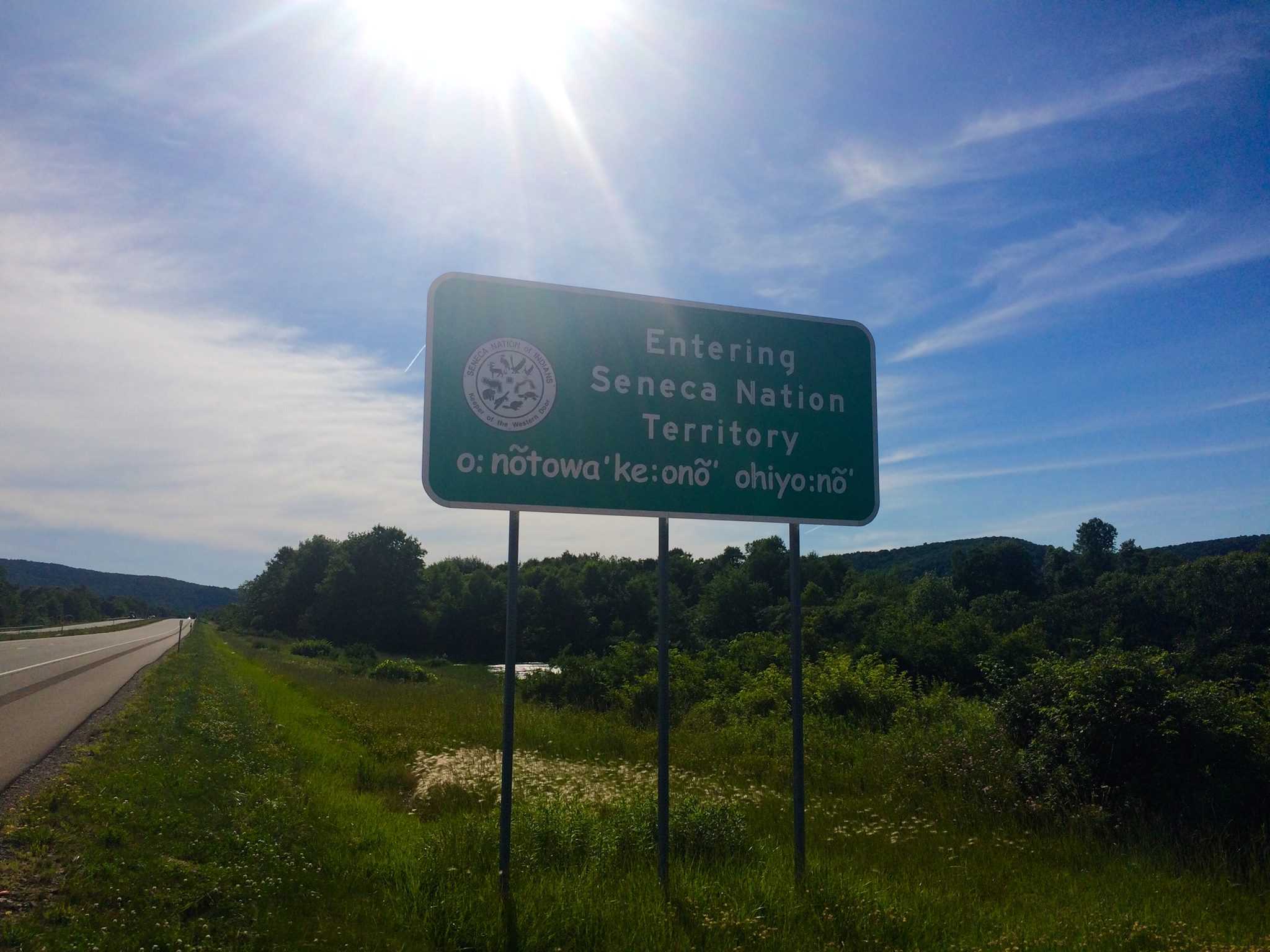 |
| Road sign in Cattaraugus County, N.Y., marking a boundary of the Seneca Nation's Allegany Reservation. Reservation land is under threat from nearby data center development. Photo: Andre Carrotflower via Wikimedia Commons (CC BY-SA 4.0). |
Voices of Environmental Justice: Covering Native Connection to the Land
By Yessenia Funes
Grandell “Bird” Hallett Logan has spent most of his life on the territory of the Tonawanda Seneca Nation, whose 7,500-acre reservation rests near a small town in northwestern New York called Alabama.
He grew up visiting the Big Woods, his people’s ancestral hunting and gathering grounds, with his father, who continues to teach him about the various plant medicines the Earth provides.
“My connection to the land, as I’ve gotten older, has been picking up a lot of what my dad has done,” Logan said.
Now, he’s worried for the future of the land. The local Genesee County Economic Development Center has been pushing a proposed $19 billion data center for over a year. Private developer Stream Data Centers wants to build the data center campus right next to the nation’s territory, potentially threatening the land and cultural relations they have left.
The project is on pause thanks to New York’s first-of-its-kind data center moratorium and a lawsuit the nation filed with the Sierra Club, but their battle reflects a wider tension Indigenous and Native communities face in the U.S.
Since colonization, Indigenous peoples
have been defending their land
from different forms of exploitation.
Since colonization, Indigenous peoples have been defending their land from different forms of exploitation: the fossil fuel industry, Big Tech, Western conservation and plenty of others.
Those issues haven’t disappeared, yet I’m finding less and less coverage of them in environmental media.
Native American Heritage Month is here, so I’m urging my peers not to abandon the Indigenous nations and tribes that need their struggles and victories uplifted. There are more stories for any one person to cover, so let’s dig in.
Sovereignty central to data center issue
Data centers are a hot topic right now. All types of communities are standing up to stop local proposals because they’re worried about rising energy bills, noise pollution and increased fossil fuel pollution.
Indigenous peoples are no exception. A few key points, however, make the issue unique for nations like the Tonawanda Seneca.
First is the question of sovereignty. “We have these inherent rights that have been codified into treaties,” Logan explained. Indigenous nations aren’t a race or ethnicity. They are sovereign political entities that govern themselves — just as a state or country governs itself.
The U.S. government and private companies are supposed to honor that status, but they have their own interests that don’t always align with those of local Indigenous peoples.
And a lot of that is due to split worldviews. While many Indigenous cultures treat rivers and woods as spirits and relatives, Western cultures usually see them as resources to extract and sell.
Indigenous perspectives deserve space
in our reporting. Our job as journalists is
to understand the communities we’re
writing about and portray them accurately.
Indigenous perspectives deserve space in our reporting. Our job as journalists is to understand the communities we’re writing about and portray them accurately without exoticizing them.
“All these things are connected for me: the language, the environment, the culture,” Logan said. “I think what’s difficult is a lot of the people making decisions in the U.S. come from a history of settlers.”
History is also a crucial part of any story involving Indigenous peoples. There’s trauma attached to the genocide tribes and nations have experienced in the United States.
Health disparities have followed, said Michelle Montgomery, a professor at the University of Washington Tacoma and enrolled member of the Haliwa Saponi Tribe. Improving health outcomes in Indigenous communities is directly tied to safeguarding their local environment.
“Wellness is about healing from the inside out,” Montgomery said. “Everything around us is an elder. The teachings come from the land. They come from place. It comes from the water. When you disrupt those relationships, you disrupt identity. You disrupt movements and the process of healing that many communities are embracing. … It’s important to really think about how disruptive data centers are to that reciprocity of relationships.”
Pipeline troubles continue
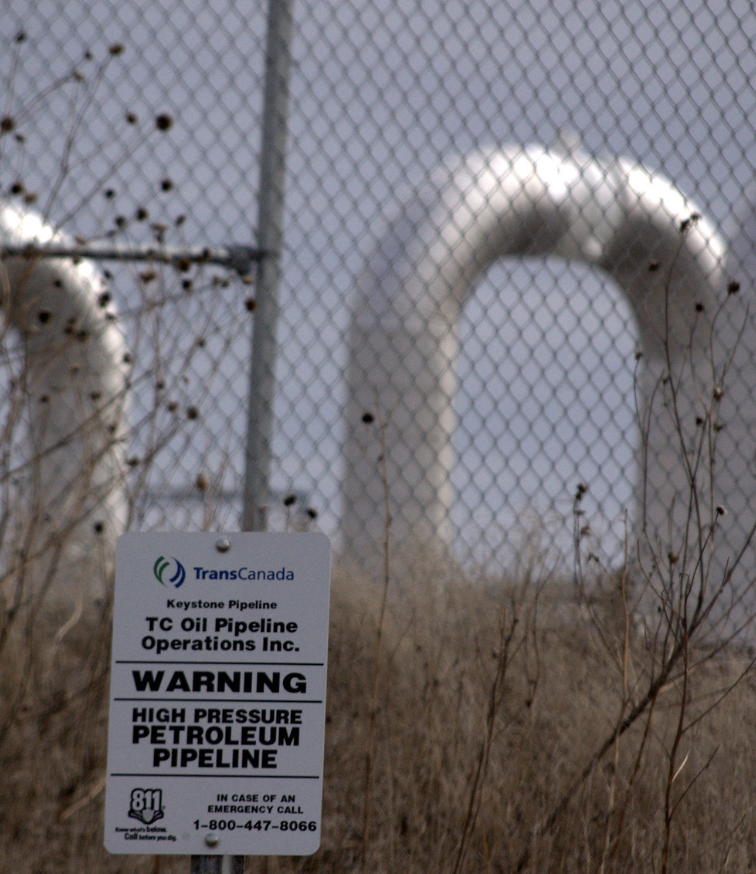 |
| A Keystone Pipeline installation in Nebraska. Photo: shannonpatrick17 via Flickr Creative Commons (CC BY 2.0). |
Data centers aren’t the only story environmental and climate journalists should chase in service of Indigenous communities. Several Indigenous experts I reached out to pointed to fossil fuel infrastructure as a top issue affecting tribes and nations.
Remember the Dakota Access pipeline in North Dakota? The crude oil pipeline that thrust the Standing Rock Sioux Tribe into the international spotlight? The 10-year anniversary recently passed, yet I barely heard a whisper.
Johnnie Jae, a disabled Otoe-Missouria and Choctaw journalist and founder of Red Pop! News, remembers an assignment she received from a news outlet to cover Standing Rock back in 2016.
She knew she wasn’t the right person for the job, so she turned it down: “Not just because I couldn’t immediately get there, but also because I’m not from that community, and I didn’t know enough about the issue.”
Instead of listening, the editor tried to pressure her into taking the assignment, suggesting that a local Indigenous reporter couldn’t be objective. “That really did not sit well with me because who better to tell these stories than the people who are most impacted?”
Jae shared that many water protectors who organized against the pipeline are still struggling with PTSD or other issues related to police attacks and the deployment of chemical weapons on their movement. I’d like to read those stories. Even more are waiting to be told, especially as the Dakota Access continues to pump oil through sacred waterways.
Niiyokamigaabaw Deondre Smiles, an assistant professor of Indigenous studies at Bemidji State University and member of the Leech Lake Band of Ojibwe in Minnesota, flagged that spills happen regularly across fossil fuel infrastructure. He wants to see more coverage of oil spills happening across pipelines like Dakota Access or Line 3 and 5.
“Any spill of any kind is not good,” Smiles said. “These chemicals are not supposed to be going into the Earth and the water.”
Journalist watchdogs have an increased responsibility to monitor these activities under President Donald Trump, whose administration has both prioritized fossil fuel expansion and rolled back environmental regulations at the same time.
“The current geopolitical situation may incentivize continued exploitation of domestic fossil fuels and continued impacts to Native territories,” said Ryan Emanuel, an environmental professor at Duke University and member of the Lumbee Tribe in North Carolina.
One region feeling this acutely? The Arctic.
Disaster protocols lacking
Heather Sauyaq Jean Gordon, a tribal citizen of the Nome Eskimo Community, wants to see more media coverage around disaster response and the failed system of decisions that contribute to that response. “What can we do for prevention, and what can we do for adaptation?” she said.
In Alaska, entire communities are facing relocation due to increased coastal erosion and storms, but there’s so much confusion and disagreement over who pays and who decides where the families go.
States like Florida and California have clear protocols when disasters like hurricanes or wildfires strike, but the extreme weather happening now is new territory for Alaska Native Tribes.
“There’s just not the level of support or repair that we see in other places that have had these regular patterns of damage and repair,” Gordon said.
Iñupiat communities have ancestral knowledge of how to live on these harsh terrains, but they need support to weave that wisdom into political and geographical infrastructure. That support can look like policy, but it also looks like money, which the Trump administration has cut dramatically for Indigenous scientists.
Funding and research go hand in hand, a whole other issue that needs urgent attention, said Kyle Whyte, an environmental justice professor at the University of Michigan and member of the Citizen Potawatomi Nation in Oklahoma.
“Indigenous people for a long time have been making progress to basically ensure that we can manage and care for our territories and that we can also be the ones who are managing the funds and the resources for being able to do so,” Whyte explained.
New Indigenous philanthropies are
emerging while large, international
scientific assessments are including
more Indigenous perspectives.
New Indigenous philanthropies are emerging while large, international scientific assessments are including more Indigenous perspectives. Major strides were made for Indigenous representation under former President Joe Biden.
Journalists have a duty to follow that progress and hold accountable whoever is impeding it. That work starts by building trust with the Indigenous communities who hold those stories closest.
Getting started on this story
Here are some more resources and links for those ready to jump in:
- Consume as much Native media as you can to support the journalists doing this the best: Indian Country Today, Native News Online and Underscore Native News. Grist and High Country News also have committed Indigenous affairs desks.
- Michelle Montgomery hosts an Indigenous speaker series at the University of Washington Tacoma. You can go through the list of speakers and watch the videos.
- I didn’t get into the importance of verifying Indigenous identities and tribal enrollment, but Grist Editor-at-Large Tristan Ahtone published a powerful investigation earlier this year that included tips on how journalists can avoid being misled during their reporting.
- The Indigenous Journalists Association has a great guide on Indigenous identity, too!
[Editor's Note: For more, also see a Feature with tips for non-Native journalists covering Indigenous communities, and an earlier Climate Solutions special on environmental reporting through an Indigenous perspective, along with a related toolbox on nature-based solutions and native/Indigenous perspectives. Plus, check out a Feature on how Native tribal nations push for changes in public lands and a Backgrounder on finding Native people at the heart of the environment beat.]
Yessenia Funes is an environmental journalist who has covered the justice beat for a decade. She publishes a creative climate newsletter called Possibilities. Funes has written for publications like Atmos, Vogue, Vox, New York magazine, The Guardian and more. Her approach to storytelling amplifies the voices of those on the front line of our present-day ecological crises. Her reporting has taken her to the West Bank, remote Indigenous communities in Nicaragua, the hostile desert of the American Southwest and post-Hurricane Maria Puerto Rico. Her most recent Voices column was on unpacking Puerto Rico’s water crisis.
* From the weekly news magazine SEJournal Online, Vol. 11, No. 39. Content from each new issue of SEJournal Online is available to the public via the SEJournal Online main page. Subscribe to the e-newsletter here. And see past issues of the SEJournal archived here.
SEJ Publication Types:
Topics on the Beat:
Region:
Visibility: