


SEJournal Online is the digital news magazine of the Society of Environmental Journalists. Learn more about SEJournal Online, including submission, subscription and advertising information.
September 2, 2026
 |
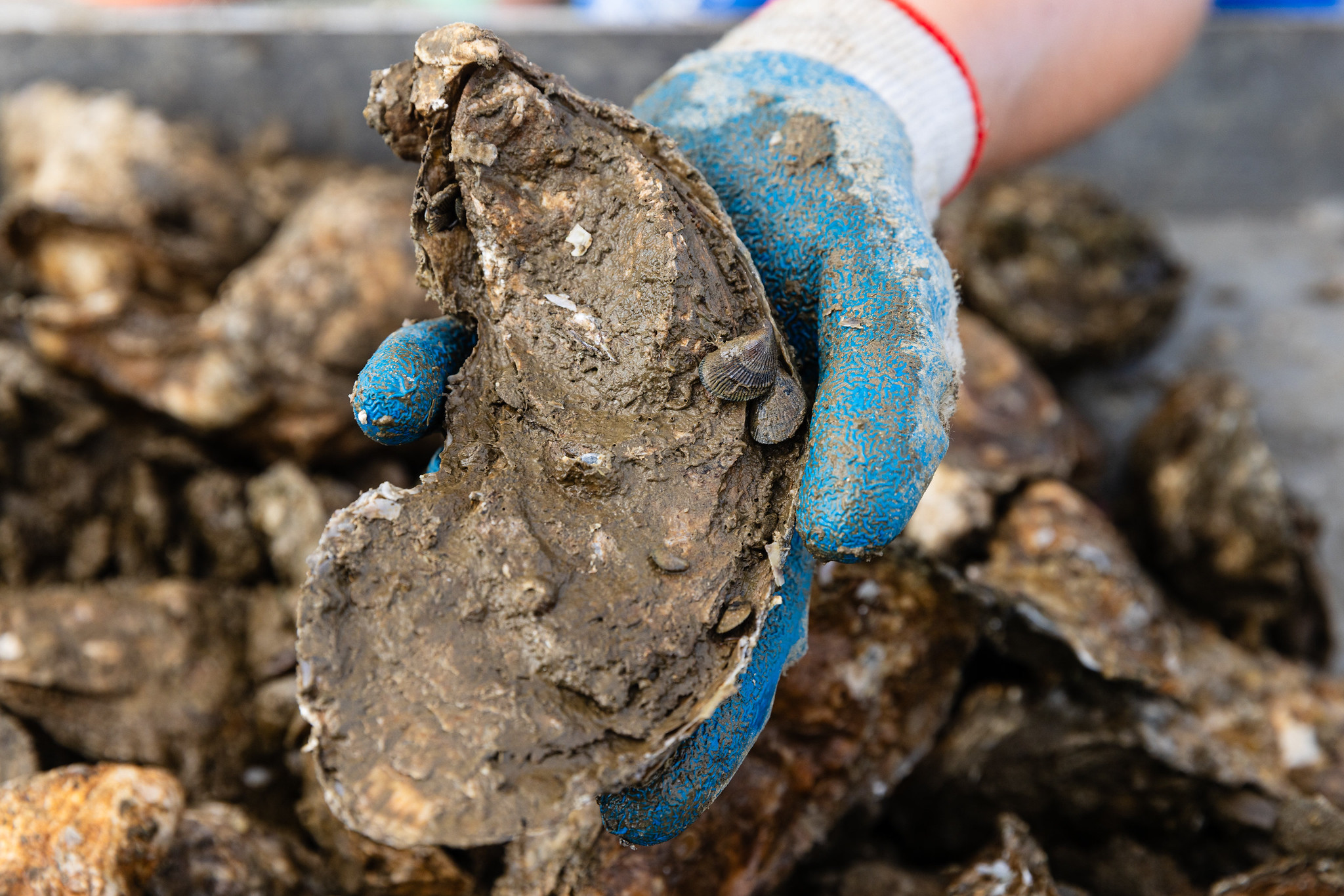 |
| Efforts are being made to bring oysters back from widespread depletion. Above, a large oyster from a coastal restoration program in Queen Anne's County, Maryland, in June 2025. Photo: Chesapeake Bay Program/Charlie Nick via Flickr Creative Commons (CC BY-NC 4.0) |
TipSheet: Oysters, Boisterous or Scarce, Fuel Local Environment Stories
By Joseph A. Davis
Oysters are a lot like environmental journalists: a great source of information about the quality and quantity of their native waters.
Eating oysters is a pleasure for many people, and has been for millenia (but please don’t eat the journalists; many are tough and bitter). Oysters are one of the few foods humans eat while it’s still alive, and they taste like the sea. Try them with mignonette rather than red cocktail sauce.
Since water pollution is still a problem
in many parts of the United States,
oysters, being local-ish, tell
a lot about water conditions.
But, on a more serious note, since water pollution is still a problem in many parts of the United States — and the pollutants vary widely with place — oysters, being local-ish, tell a lot about water conditions.
You know what we mean if you have ever eaten a bad oyster. It’s awful. The stomach cramps don’t start until hours later. So if you have the slightest doubt, cook them. If you have New Orleans in your soul, try a fried oyster po’boy.
Why it matters
One thing oysters say a lot about is salinity. They flourish in slightly brackish waters. Salinity does not drastically or often affect human health — but it does affect many aspects of an estuarine ecosystem.
Cholera, on the other hand, does affect human health. Tim Wheeler, one of the best oyster mavens in the environmental journalism community, wrote a piece in the Bay Journal this summer about the discovery of Vibrio in Chesapeake waters.
Vibrio in oysters can make you very sick. It’s actually a family of microbes, one of which is a flesh-eating bacterium and another of which causes cholera. Cholera was common before modern sewage treatment was invented, sickening or killing many people. Vibrio of all kinds are more plentiful in the summer, when water temperatures increase.
The backstory
Humans have been eating oysters for millenia, archaeology tells us. Evidence of oyster-eating as long ago as 164,000 B.C. has been found in a South African cave. After postglacial sea level rise filled the Chesapeake some 12,000 years ago, Indigenous Americans ate them.
Captain John Smith, upon arriving in 1608, reported oyster beds so thick as to be an obstacle to navigation. European settlers, as their population grew in the 1800s, harvested and ate huge quantities of oysters. The advent of refrigerated railcars expanded the market further, all over the U.S. The numbers of U.S. oysters harvested in the 1800s and 1900s were vast.
It’s hard to imagine that waters around New York City ever had oysters, but they had shoals and shoals of them. Today, pollution makes them rare and usually inedible.
By the 1900s, oysters in the
Chesapeake and elsewhere
were being depleted —
not just by overharvesting.
And by the 1900s, oysters in the Chesapeake and elsewhere were being depleted — not just by overharvesting, but by disease, parasites, pollution and temperature and salinity changes.
Efforts are being made to bring them back (see Mark Kurlansky’s book “The Big Oyster”). Different kinds of oysters still appear along many U.S. coasts. New Orleans’ Acme Oyster House serves Gulf oysters, which are plentiful. The oyster fishery around Apalachicola in Florida is recovering. The West Coast has different species of oysters, which are also delicious.
Story ideas
TipSheet buys oysters as close to the source as possible. Say “yes” to established oyster farmers and known longtime vendors at near-water seafood markets and popular seafood restaurants.
- Visit the nearest raw bar and talk to the person (often a bartender) who actually shucks the oysters. After praising their skill, ask about their supply sources. (Then tell your editor that the time you spend at the oyster bar is research. Submit expenses).
- Visit an oyster farm near you (if you are on the coast) and ask for a tour. Take pictures. Ask questions. What kind of oysters do they grow? How do they grow them? Where do they sell them? What are their water quality concerns?
- Find watermen (or women) who actually harvest “wild” oysters. Ask if you can join them on their boats. Bring a camera. How do they feel about water quality? Harvest limits?
- If there is a Sea Grant office in your area, call or visit them. Check out a directory here. Ask how the oysters are doing (and get recipes).
- Sift local and regional universities for oceanography and marine studies schools and departments. Ask to talk to any bivalve experts. What are they studying? Can you go out on a boat with them? Visit labs?
- How are your local oysters (the ones not raised on farms) harvested? Some methods, like dredging, destroy oyster habitat. Others, like tonging, don’t.
- Who regulates oysters, farmed or wild, in your state? Have they closed any farms, hatcheries or wild harvest beds this year? In recent years? Why? Do they expect to close any in future years?
Reporting resources
- National Oceanic and Atmospheric Administration: NOAA manages regional fisheries programs.
- Chesapeake Bay Program: This government-private program watches out for the Bay, a big source of oysters.
- Maryland Watermen’s Association: An industry group. Ask them if they like restrictions on oyster harvest. There are other watermen’s groups around the Chesapeake too.
- Chesapeake Oyster Recovery Partnership: This public-private-academic coalition is gaining success in restoring Bay populations hurt by overharvesting, disease, habitat destruction and pollution.
- Gulf Oyster Industry Council: A trade group lobbying for Gulf oysters and the people who catch them.
- Pacific Coast Shellfish Growers Association: Same as above, but for the West Coast.
- Monterey Bay Aquarium: A great information source about everything Pacific, this nonprofit museum rates seafood for sustainability and educates people about oysters. Its buying guide likes oysters.
Joseph A. Davis is a freelance writer/editor in Washington, D.C. who has been writing about the environment since 1976. He writes SEJournal Online's TipSheet, Reporter's Toolbox and Issue Backgrounder, and curates SEJ's weekday news headlines service EJToday and @EJTodayNews. Davis also directs SEJ's Freedom of Information Project and writes the WatchDog opinion column.
* From the weekly news magazine SEJournal Online, Vol. 11, No. 30. Content from each new issue of SEJournal Online is available to the public via the SEJournal Online main page. Subscribe to the e-newsletter here. And see past issues of the SEJournal archived here.
SEJ Publication Types:
Topics on the Beat:
Region:
Visibility: