


SEJournal Online is the digital news magazine of the Society of Environmental Journalists. Learn more about SEJournal Online, including submission, subscription and advertising information.
August 5, 2026
 |
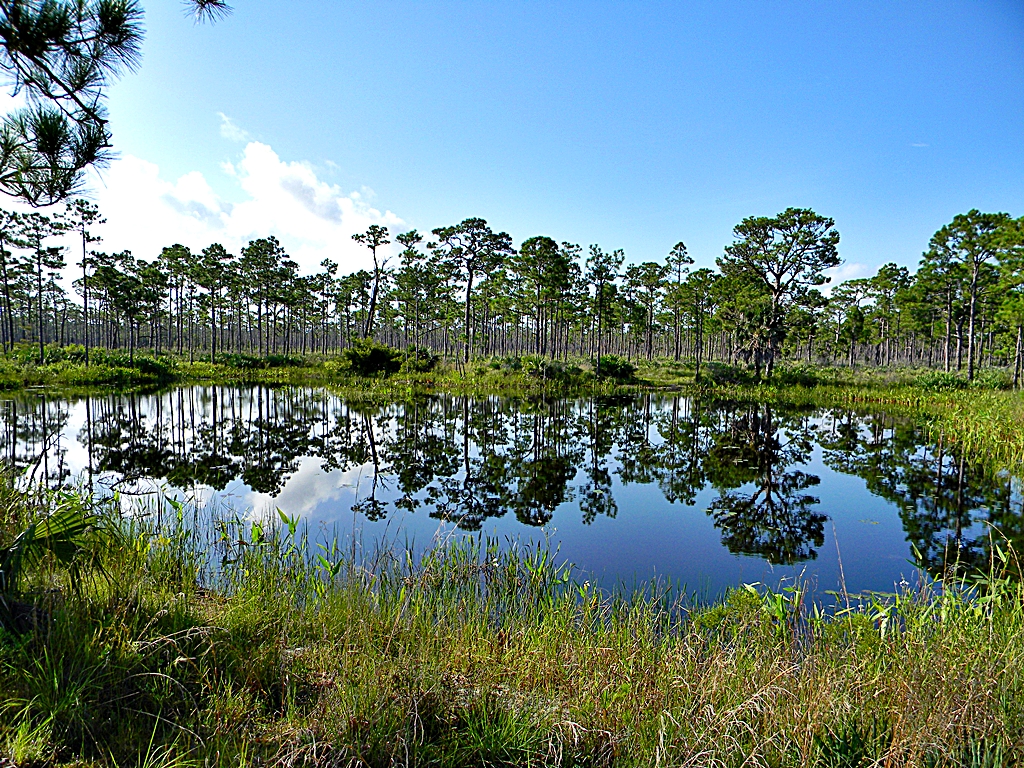 |
| Pine flatwoods in Jonathan Dickinson State Park. Plans to develop this and other Florida parks ignited a rare bipartisan backlash. Photo: Bob Peterson via Flickr Creative Commons (CC BY 2.0). |
Inside Story: Reporters Uncover a State Parks Scandal in Florida
An in-depth investigation into the Florida Department of Environmental Protection’s plans to turn sensitive habitat in state parks over to recreational uses including hotels and golf courses earned Tampa Bay Times reporters Max Chesnes and Emily L. Mahoney first place for Outstanding Beat Reporting, Large, in SEJ’s 24th Annual Awards for Reporting on the Environment.
Judges were impressed by the project’s “reporting and storytelling that demonstrates clear impact via community outrage and ultimately an abandonment of development plans by Governor DeSantis.” Calling the series “outstanding,” they noted that Florida politicians subsequently passed legislation that prevents future development of the public parks.
SEJournal Online recently caught up with Chesnes and Mahoney by email. Below is the conversation, edited for clarity and style.
SEJournal: How did you get your winning story idea?
Max Chesnes and Emily L. Mahoney: The first scoop in our “Parks in Peril” series came from an emailed batch of documents accompanied by an anonymous memo, which we would later learn were leaked by a whistleblower working for Florida's environmental regulatory agency. The draft documents detailed plans to develop nine state parks with golf courses and hotels, and the anonymous memo said the state was planning to schedule simultaneous meetings from Miami to the Florida Panhandle where the proposals would be presented to the public. The whistleblower, a cartographer named James Gaddis working in the parks division, would later be fired for leaking the information. He is now suing the DeSantis administration for retaliation.
SEJournal: What was the biggest challenge in reporting the pieces and how did you solve that challenge?
'By gaining the trust of multiple former
state employees, we shed light on the
unusual secrecy officials enforced
within the environmental agency.'
Chesnes and Mahoney: The DeSantis administration in Florida has become increasingly combative with the media — barring most state employees from speaking to reporters and typically taking many months to release public records requested by journalists. This posed a significant challenge as we worked to determine what was really going on behind the scenes of this controversial plan, while DeSantis distanced himself from it in public. But we worked around these obstacles through our deep sourcing and by using the paper’s lawyers to help press the state for records. We obtained documents showing that DeSantis’ office was intimately involved in pushing these proposals. By gaining the trust of multiple former state employees, we also shed light on the unusual secrecy officials enforced within the environmental agency as these plans advanced.
SEJournal: What most surprised you about your reporting?
Chesnes and Mahoney: Perhaps the largest surprise was after the Tampa Bay Times revealed the existence of these plans for Florida state parks, there was an immediate and bipartisan backlash. In a state as politically divided as the rest of our country, Floridians of all stripes came together in defense of their public lands, with thousands of protesters convening over several days of demonstrations at parks across the state. Conservative and liberal politicians stood together behind lecterns to decry the developments. Elected officials from all levels of government — including Congress, the Florida Legislature and city halls — took a firm stance against the plans and cited the Times' reporting in their communications.
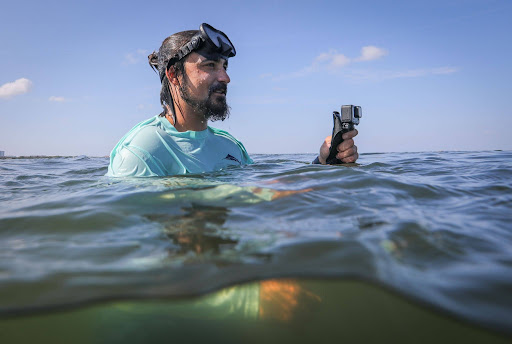 |
| Max Chesnes |
Also surprising was the legislative action that lawmakers took to enshrine stronger protections for Florida parks. DeSantis signed the bill, “The State Park Preservation Act,” into law in May 2025, outlawing the initiative his own administration had pursued after immense public pressure.
SEJournal: How did you decide to tell the series and why?
Chesnes and Mahoney: From the moment we first confirmed the draft proposals — including a map with 18-hole golf courses overlayed on top of protected scrub land — we knew the story would be the environmental scoop of the year in Florida. The undeniable stakes of pending habitat destruction and the high level of political and social influence involved in the proposal (including famed golfer Jack Nicklaus) made the quest for answers and accountability an urgent necessity.
We approached the series as a drumbeat of scoops, reporting daily articles as new information arose through a firehose of tips, public records and interviews. Because the story was moving so quickly, there was no question that publishing new information as we confirmed it was the best approach. Along the way, we gathered details and records that would eventually result in a sweeping, end-of-year story that answered some of the public’s biggest lingering questions and gave Floridians a behind-the-scenes look at how the plans came together — then quickly fell apart.
SEJournal: Does the issue covered in your series have disproportional impact on people of low income, or people with a particular ethnic or racial background? What efforts, if any, did you make to include perspectives of people who may feel that journalists have left them out of public conversation over the years?
'Because wild, outdoor spaces are
treasured by all Floridians regardless
of background, these stories
ignited widespread public backlash.’
Chesnes and Mahoney: Because wild, outdoor spaces are treasured by all Floridians regardless of background, these stories ignited widespread public backlash, and we worked to highlight the diversity of residents who united against the state’s plans.
During the third day of protests at Honeymoon Island State Park, for example, we spoke at length with speaker Lauren Gay, a Black blogger who goes by “Outdoorsy Diva.” Her mission is to inspire Black women and people of color to use nature as therapy and to encourage outdoor experiences among minorities, who data show visit preserved parks disproportionately less than white Americans. Gay is trying to change that through her advocacy, she told us.
Another woman attending a protest told us her husband, a military veteran, relies on hikes through Florida state parks to soothe his mind, like therapy.
We also reported on the American Indian Movement of Florida, an Indigenous advocacy group, who wrote that it intended to sue the state over apparent violations of federal Indigenous protections laws, including the Native American Graves Protection and Repatriation Act and the American Indian Religious Freedom Act.
SEJournal: What would you do differently now, if anything, in reporting or telling the series and why?
Chesnes and Mahoney: The series of parks stories was not a typical investigative, monthslong project, but instead was a rolling investigation with regular, breaking updates, which we published as we confirmed new information. While nontraditional in some ways, this drumbeat approach prompted more people to come forward with tips as the public outrage grew, and continuously built an enormous base of engaged readers. After months of scoops, the frenetic pace of the saga started to let up, allowing us to switch gears to longer-form storytelling as we reported out new information over the course of several months.
SEJournal: What lessons have you learned from your story or project?
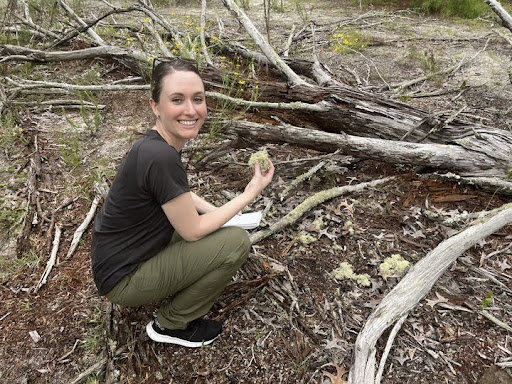 |
| Emily L. Mahoney |
Chesnes and Mahoney: As Florida’s partisan divide continues to deepen, few things — let alone few pieces of journalism — have united the state in recent years quite like the state parks controversy. We all were reminded once more that Floridians of all political backgrounds care deeply for their public lands.
On one day alone last August, for example, at least four protests were held across the state, from Miami to Tampa to the front steps of the state’s environmental agency in Tallahassee. More demonstrations erupted on additional days.
Artists flooded social media with custom creations to broadcast opposition to their audiences. Posters depicting pink-feathered roseate spoonbills and alligators in swamps accompanied a five-word rallying cry: “Keep Florida State Parks Wild.” A musician shared a protest ballad he wrote about the saga to his million subscribers. Some Floridians made and sold T-shirts, their proceeds going to parks protection.
In hundreds of emails and letters written to state officials in opposition to the plans, obtained by the Times through public records requests, residents of all political stripes expressed passionate opposition to developing preserved land. “I have been a Republican my whole life and thought I knew what we stood for,” one letter read. “Please stop the land swap and state park development.”
And we both received dozens of heartfelt reader emails thanking us for the coverage.
At a time when political tensions are heightened, the Tampa Bay Times’ reporting proved Floridians can come together in defense of beloved natural spaces.
SEJournal: What practical advice would you give to other reporters pursuing similar projects, including any specific techniques or tools you used and could tell us more about?
Chesnes and Mahoney: The antidote to inaccessible governmental officials is deep sourcing and public documents. We filed public records requests across multiple agencies each day as we learned of new possible paper trails that might exist, and new scoops emerged from those records — like how state officials at one point considered 17 parks for development, far more than the nine that eventually emerged.
Incorporating visual journalism that showed readers the protected lands at risk was also deeply important to give readers a sense of the stakes. For instance, Chesnes is a licensed drone pilot and launched his drone above the Withlacoochee State Forest parcel that could have been traded away to a luxury golf developer. That drone imagery created a clear contrast for readers visually: an imperiled forest habitat directly next door to rolling golf greens owned by a developer who wanted the protected forest land to expand its business.
SEJournal: Could you characterize the resources that went into producing your prize-winning reporting (estimated costs, i.e., legal, travel or other; or estimated hours spent by the team to produce)? Did you receive any grants or fellowships to support it?
Chesnes and Mahoney: To complete this series of stories on state parks, we continuously reported and published stories over more than 12 months, representing hundreds of hours while we also juggled other beat coverage and breaking news, including two hurricanes striking the Tampa Bay area over the span of 13 days. We traveled to the Withlacoochee State Forest, the Guana wildlife preserve and the Legislature in Tallahassee, plus relied on the paper's lawyers to help pry records loose from the state government. All in all, these efforts cost the paper thousands of dollars, but generated hundreds of new subscribers.
SEJournal: Is there anything else you would like to share about this project or environmental journalism that wasn’t captured above?
Chesnes and Mahoney: This reporting contributed in part to the eventual formation of the Tampa Bay Times' Environment Hub, a team of four full-time reporters covering environmental issues in the state of Florida. Our reporting for the “Parks in Peril” series prompted several large donations that helped create the financial backing to support the Hub. We are deeply grateful for the continued support.
Max Chesnes is the environment reporter for the Tampa Bay Times, where he's a member of the newspaper's Environment Hub. He reports on public lands, water quality, pollution, wildlife and everything in between. Prior to working for the Times, Chesnes covered environmental issues for Treasure Coast Newspapers and the USA Today network, writing about Lake Okeechobee, the Indian River Lagoon and Florida’s wondrous Everglades. Chesnes is a 2023 journalism fellow at Columbia University’s Center on Global Energy Policy and a recipient of several environmental writing awards. He studied both journalism and sustainability at the University of Florida and is licensed to fly drones.
Emily L. Mahoney is the energy reporter at the Tampa Bay Times, where she's a member of the newspaper's Environment Hub. Her work focuses on holding powerful special interests accountable, from the utility industry hiking rates on Floridians' electric bills to developers seeking conserved, public land for private benefit. Previously, she covered politics, including Gov. Ron DeSantis' two campaigns for governor and his presidential run, plus the Florida Legislature as a Tallahassee correspondent. She's originally from Arizona and holds a masters degree in journalism from Arizona State University.
* From the weekly news magazine SEJournal Online, Vol. 11, No. 28. Content from each new issue of SEJournal Online is available to the public via the SEJournal Online main page. Subscribe to the e-newsletter here. And see past issues of the SEJournal archived here.
SEJ Publication Types:
Topics on the Beat:
Visibility: