


SEJournal Online is the digital news magazine of the Society of Environmental Journalists. Learn more about SEJournal Online, including submission, subscription and advertising information.
March 11, 2026
 |
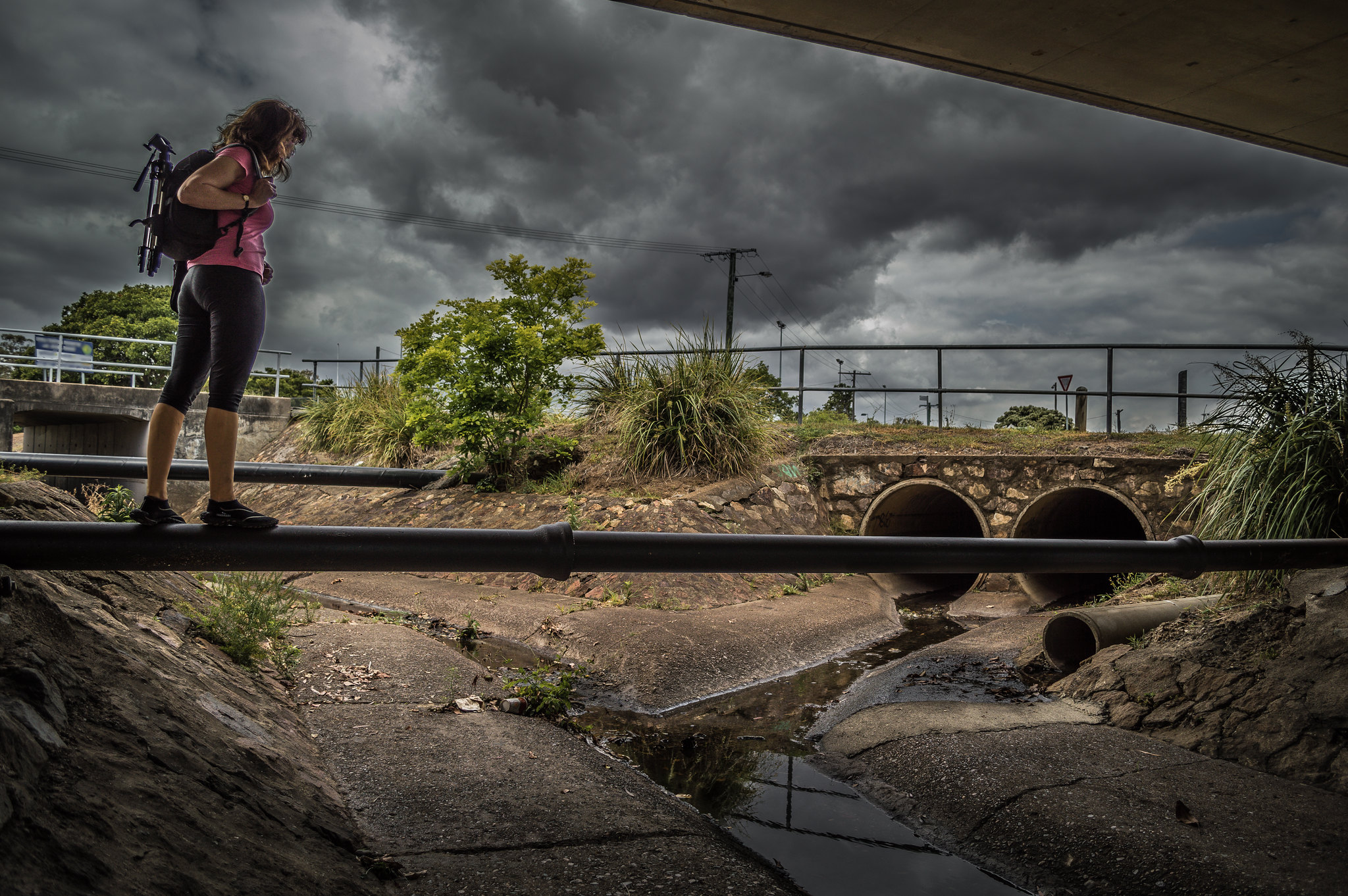 |
| With journalists facing a wide variety of perils, a group gathered to develop a series of ideas for journalistic mutual aid. The authors share their findings. Photo: Darkday via Flickr Creative Commons (CC BY 2.0). |
Feature: Environmental Journalists in a Perilous Era — A Survival Guide
By Michael C. Bradbury and Madeline Ostrander
Sometimes it feels like the state of environmental journalism mirrors the disasters we cover, as if economic and political wildfires are tearing through our industry.
But what if solutions to this crisis could also reflect what happens in nature and in reporting?
Before covering any disaster, you have to arm yourself with strategies to stay safe. After any wildfire, you can look for spots where new seeds might grow.
We first started searching for strategies for journalistic protection and for media seeds and sprouts last year at the Society of Environmental Journalists annual conference in Tempe, Arizona.
We led a workshop there called “Reimagining Environmental Journalism in a Perilous Era,” which enlisted nine deep thinkers and innovators to help us lead a series of discussions about what we need to navigate this journalism landscape.
Dozens of reporters, editors and
other journalists lent their smarts
and creativity to develop a series
of ideas for journalistic mutual aid.
Dozens of reporters, editors and other journalists gathered in the room, and lent their smarts and creativity to develop a series of ideas for journalistic mutual aid.
We divided them into working groups to puzzle out solutions to a set of common dilemmas: safety; how to deepen our connections with increasingly fractured audiences; financial viability; and supporting those of us who are on the front lines of the journalism crisis — reporters and especially freelancers.
Those conversations led to a yearlong process to experiment with new ideas for freelancer and newsroom collaboration. Now we want to share some insights gained from this process with all of you.
The following resources are intended as a cross between a survival guide and a forest-replanting schedule for journalists looking for ideas about both coping with risk and regrowing our potential.
Staying safe
Journalism has always involved some inherent hazards. But in this political and technological moment, far more of us are exposed to high risk. UNESCO reports a 42% increase in physical, legal and online attacks on environmental journalists in recent years.
Like a firefighter suiting up, we need to equip ourselves with strategies and tools for defending our rights, our privacy, our physical safety, our sources and the integrity of our reporting.
According to digital security trainer David Huerta, you can start small — with your own devices and a digital hygiene checkup.
Freedom of the Press Foundation offers steps for safeguarding your phone and computer, from simple (download and use Signal as an alternative to other messaging apps and texting) to advanced (invest in an external security key, such as Yubico), so that you can build and reinforce your digital security bit by bit.
The guide from Freedom of the Press Foundation (where SEJournal Editor Adam Glenn serves as deputy editor) also helps you think through your level of risk, so you know where to focus your energies.
Journalism also involves
legal risks — especially when
bad actors can invent spurious
legal claims to harass journalists.
Increasingly, journalism also involves legal risks — especially when bad actors can invent spurious legal claims to harass journalists.
If you have a story that needs a solid legal review or if you’re already facing legal action, some law firms and organizations offer pro bono legal services to reporters.
Susan Swanberg, former criminal lawyer and biologist turned University of Arizona journalism professor, suggests checking out Davis Wright Tremaine’s Protecting Journalists Pro Bono Program. And the Reporters Committee for Freedom of the Press offers a legal hotline for journalists.
Beyond this, the Committee to Protect Journalists gives short-term emergency assistance, from mental health referrals to legal help. Its website also provides a variety of other resources for journalists in need.
Looking to the future, our journalism safety discussion group, led by Huerta and Swanberg, suggested that there are untapped opportunities for journalism organizations to create new and better resources.
The group envisioned that journalism organizations could negotiate discounted memberships to online safety resources, such as DeleteMe or EasyOptOuts, and partner with law firms to connect journalists directly with pro bono help.
Financial viability and the fates of freelancers
According to the Medill Local News Initiative at Northwestern University, more than 3,000 newspapers have closed across the United States since 2005.
On top of that are the layoffs and shutterings of other types of publications, such as the nonprofit YES! Magazine, which closed last year (and which was Ostrander’s employer more than decade ago), and Outside, which has gone through dramatic restructuring (may require subscription). The decline of such publications means that important sources of freelance work are now uncertain or gone altogether.
Increasingly, people who want
to do journalism need to
forge their own paths.
Increasingly, people who want to do journalism need to forge their own paths through the world of contracts, pavement-pounding, fundraising and financing. All of us need a dose of entrepreneurial energy.
If you are working to establish a newsroom or fundraise for a journalism organization, you can look to resources such as the Institute for Nonprofit News, Press Forward and LION Publishers (Local Independent Online News) for tips on how to raise money for reporting. And the Knight Center offers courses on this subject.
The Earth Journalism Network also provides support and seed money for international journalism organizations and projects.
If you are a solopreneur, the Freelance Solidarity Project is organizing and unionizing freelancers to help win better contracts and compensation. The Institute for Independent Journalists provides tips and resources for staying afloat as a freelancer.
More and more journalists are also experimenting with cooperative business models, including worker-owned outlets where journalists share revenue.
Looking ahead and working together, journalists could collaborate on generating revenue. For instance, our business model discussion group, led by Covering Climate Now co-founder and Executive Director Kyle Pope and University of Michigan Professor Emilia Askari, brainstormed ideas about collective marketing and bundling for newsletter writers. Journalism organizations could also help promote this expanding form of news coverage.
The workshoppers in our freelance discussion group — convened by Altavoz Lab founder Valeria Fernández, Mongabay Fellowship Editor Karen Coates, and audio and print journalist Marissa Ortega-Welch — also noted that freelancers need far more support for developing and pitching big enterprise reporting, and that journalism organizations could help create such infrastructure.
An example is palabra, a multimedia platform hosted by the National Association of Hispanic Journalists, and produced by freelance journalists.
Finally, based on the ideas and feedback we heard last year, we have also piloted a project to support freelancers and environmental newsrooms — the Environmental Journalism Story Incubator at the 2026 SEJ annual conference in Chicago, with support from the Pulitzer Center and Covering Climate Now.
Audiences
One in six Americans lives in a news desert, according to the Medill report mentioned above, and research shows that lack of access to local journalism distorts perceptions of politics and leaves audiences vulnerable to disinformation.
And here is where we especially
need to replant journalistic
seeds and regrow trust.
And here is where we especially need to replant journalistic seeds and regrow trust.
StoryReach U.S., the Pulitzer Center’s reporting and engagement accelerator, has been helping journalists get to know their audiences through a range of strategies, including public listening sessions, QR poster campaigns and radio broadcasts.
Likewise, Sentient Media has collaborated with Public News Service and other partners to repackage articles as radio pieces and distribute them to millions of listeners who might not otherwise encounter stories on the outlet’s website.
The organization has also pursued myriad cross-publishing partnerships to expand its reach, such as this project analyzing how media covers animal agriculture, with The Guardian.
If you are interested in experimenting with new ways to reach your own audience through social media, you can consult the American Press Institute’s guide to influencer collaborations.
Meanwhile, the organization Trusting News offers Trust Kits for building trust with your sources and with new audiences.
Looking ahead, our audience discussion group, led by Pulitzer Center Senior Editor Steve Sapienza and Sentient Media Executive Director Ana Bradley, found a lot of fertile ground for trying new audience-engagement strategies — including pop-up newsrooms at community events.
And like some of the other working groups, these journalists called for more avenues to promote freelance work collectively, through organizations like SEJ and by other cooperative means.
The long-term recovery
Over the last year, we’ve learned that the most important strategies for protecting journalists and journalism involve community and collaboration.
Networks, organizations, communities and collective support will determine if we can handle this period of upheaval — whether we are working as solo independent journalists or part of a newsroom.
Beyond SEJ, environmental journalists can connect with online communities through organizations like Covering Climate Now, The Uproot Project (supporting journalists of color), the Freelance Solidarity Project and the numerous other journalism support organizations that also partner with SEJ.
At the 2026 SEJ conference and in the year to come, expect to hear more about how we can work together for mutual support.
[Editor’s Note: Material for this story was drawn from a panel moderated by the authors at the Society of Environmental Journalists’ annual conference in Tempe, Arizona, in April 2025, whose sponsors are listed here. You can also learn more about the Environmental Journalism Story Incubator planned for the 2026 SEJ conference in Chicago here.]
Madeline Ostrander is an award-winning environmental journalist and the author of “At Home on an Unruly Planet: Finding Refuge on a Changed Earth,” named one of Kirkus Reviews’ 100 best nonfiction books of 2022. Her work has also appeared in The Atlantic, The NewYorker.com, The Nation, Sierra Magazine, PBS’ NOVA Next, Slate, High Country News, Audubon and numerous other outlets. She sits on the board of directors of the Society of Environmental Journalists.
Michael Bradbury is a science and climate journalist and entrepreneur with over 25 years of experience in media. He is president of the Northwest Science Writers Association.
* From the weekly news magazine SEJournal Online, Vol. 11, No. 10. Content from each new issue of SEJournal Online is available to the public via the SEJournal Online main page. Subscribe to the e-newsletter here. And see past issues of the SEJournal archived here.
SEJ Publication Types:
Topics on the Beat:
Region:
Visibility: