


SEJournal Online is the digital news magazine of the Society of Environmental Journalists. Learn more about SEJournal Online, including submission, subscription and advertising information.
September 9, 2026
 |
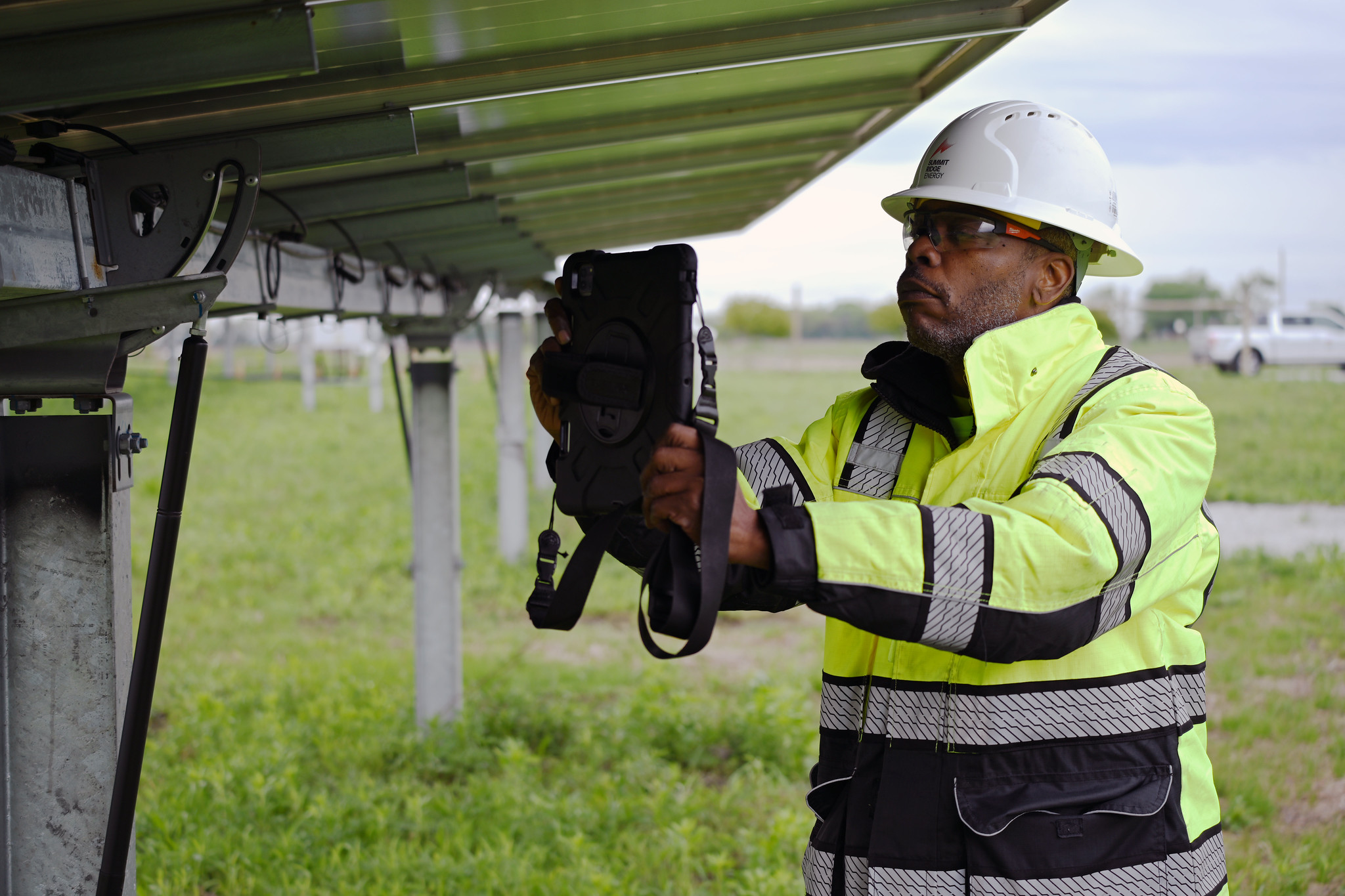 |
| A worker monitoring a community solar farm in Urbana, Illinois. The state has a strict 2050 clean energy target and a plan to phase out fossil fuel power plants. Photo: Chris Bentley via Flickr Creative Commons (CC BY-NC-ND 4.0). |
Feature: Decarbonizing Energy Systems With Clean Firm Power
By Nicolás Rivero
To avoid the worst consequences of climate change, the world needs to rebuild its energy systems to eliminate planet-warming greenhouse gas pollution. So far, solar panels and wind turbines have taken a leading role, ramping up more rapidly and less expensively than even optimists predicted.
But solar and wind won’t be enough to keep the lights on without heating the planet, according to three energy experts from a think tank, a state regulator and a data center developer.
“Solar and wind are becoming so cheap that they can be the mainstay of power systems of the future, but they can't do it alone,” said Karl Hausker, a senior fellow in the Polsky Center for the Global Energy Transition at the World Resources Institute.
To build a truly zero-emissions grid, Hausker said, the world needs “clean firm power,” a broad category of technologies that can deliver electricity on demand without releasing carbon dioxide into the atmosphere.
Opportunities for always-on clean energy
Hausker and other proponents of clean firm power say a new generation of nuclear reactors, geothermal plants, batteries and other technologies could step in when the wind isn’t blowing and the sun isn’t shining — if they can overcome technological hurdles and bring their costs down.
There are opportunities to develop these technologies in the United States even under a presidential administration that has downplayed the threat of climate change and sought to boost oil, gas and coal production.
Although the Trump administration and congressional Republicans phased out federal subsidies for wind and solar projects, they left federal subsidies for nuclear, geothermal and utility-scale energy storage mostly untouched.
Data center developers are
willing to pay high prices
for always-on clean energy,
creating a market for early projects.
Clean firm power may also get a boost from the AI boom, which has driven up the cost of electricity and strained tech companies’ ability to meet their climate goals. Data center developers are willing to pay high prices for always-on clean energy, creating a market for early projects.
“You need first movers to adopt and build and deploy,” said Tyler Huebner, a member of Google’s Energy Market Development team. “Hopefully then you can bring the cost down, so the next level of users can take it on.”
The limits of solar and wind
In the United States and around the world, most new electricity generation capacity comes from solar and wind, which have grown quickly as their prices have fallen.
But they can be a headache for grid operators. The amount of electricity generated by solar panels and wind turbines fluctuates depending on the weather, season and time of day.
To avoid blackouts, wind and solar have to be paired with some combination of batteries, transmission lines that can shift energy between regions and “peaker” power plants — typically gas turbines that can ramp up or down to balance renewable output.
When solar and wind are a relatively small part of the grid, evening out their intermittent power is relatively cheap. But that balancing act gets harder and more expensive as wind and solar become a bigger part of the grid.
Last year, 17% of U.S. electricity came from wind and solar power, which is still very manageable, according to Hausker.
Scientists at the National Renewable Energy Laboratory wrote in a 2021 paper that “there is no simple answer to how far we can increase RE penetration before costs rise dramatically or reliability becomes compromised.” But Hausker offered a rough rule of thumb.
When wind and solar generate less than 40% of the electricity on the grid, it’s pretty cheap to balance them out with batteries and gas power plants.
Between 40 and 80%, it gets harder to deal with the overnight gap in solar power, but it’s doable with enough battery capacity. Longer-lasting batteries, which are still being developed, would help with this challenge.
Beyond 80%, costs rise fast. Grids have to deal with seasonal variations in wind and sunshine, which means storing energy for months — a “largely unsolved” problem, Hausker said.
Iron-air batteries, hot rocks and more
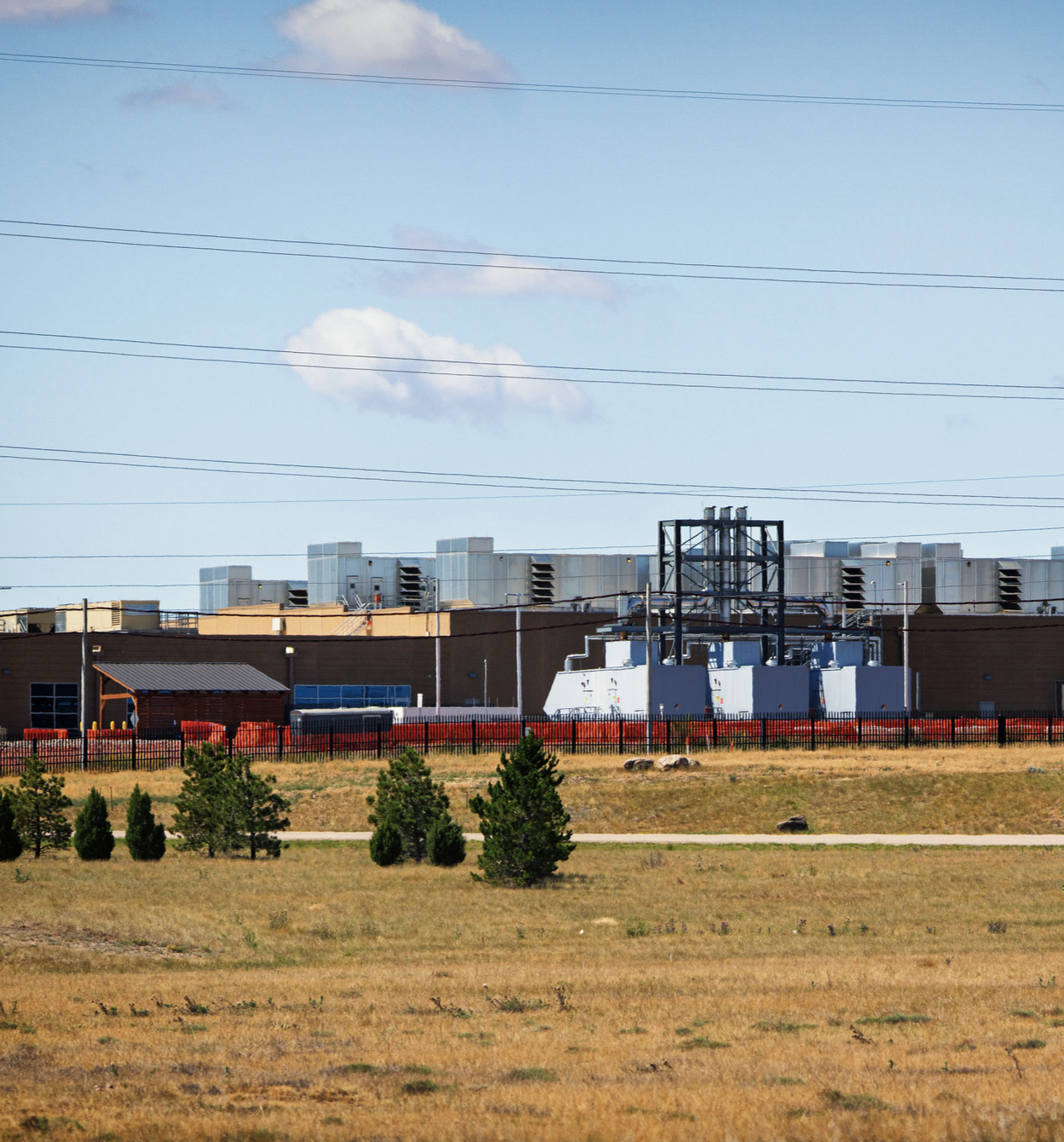 |
| A Microsoft data center in Cheyenne, Wyoming, in July 2026. Photo: Tony Webster via Flickr Creative Commons (CC BY 4.0). |
This is where clean firm power sources come into play.
Long-duration batteries could store energy for days to smooth out long lulls in wind and sunshine. Form Energy, for instance, says it’s building an iron-air battery that can deliver 300 megawatts of electricity for 100 hours (compared to about four hours of storage for a standard lithium-ion battery). The project will help power a Google data center in Minnesota.
Enhanced and “superhot” geothermal plants use techniques borrowed from the fracking industry, among other innovations, to make electricity from a wider range of hot rocks, which could allow this 24/7 source of zero-carbon electricity to work in more places.
For example, Fervo Energy is building a 500-megawatt enhanced geothermal project in Utah to sell power to utilities and a Google data center.
Meanwhile, Google and Microsoft are each bankrolling projects to restart shuttered nuclear plants in Iowa and at Three Mile Island, Pennsylvania (subscription required).
And other companies are working on new nuclear designs dubbed “small modular reactors,” which proponents say can be built more quickly and easily than previous designs.
The drive for more energy has even pushed companies to invest in natural gas plants that capture their carbon dioxide pollution and store it underground. The technology is expensive and has historically struggled to meet promised capture rates, but proponents say it will improve with time. Google is backing a 400-megawatt gas plant with carbon capture equipment in Decatur, Illinois.
“It's so important to develop a menu and place bets on multiple technologies,” Hausker said. ”We don't know how these things are going to play out. We just know we need lots of them available to solve climate change.”
An uncertain path to net zero
Although energy experts can’t be sure which of these technologies will succeed or fail, Hausker and the other experts emphasized the need to keep all options open.
Many U.S. states have set net-zero emissions targets, but they generally target 100% clean energy, including sources such as nuclear and natural gas with carbon capture, rather than restricting themselves to 100% renewable energy, including solar, wind, geothermal and hydroelectric power.
Illinois, for instance, has a strict 2050 clean energy target and a plan to phase out fossil fuel power plants — but its goals leave room for its large nuclear fleet to play a leading role.
That flexibility makes it much more feasible for the state to reach its goals while dealing with rising energy demand and trying to keep costs down, according to Doug Scott, chairman of the Illinois Commerce Commission, the regulatory body that oversees the state’s energy industry.
“Before the last couple years, we felt really pretty confident about our ability to do 100% clean energy by 2050,” said Scott. “We still think that way, but with the advent of larger loads we're looking at new variables that we weren't looking at back in 2021.”
Alternatives to wind and solar are also
crucial for tech companies, which made
splashy public climate commitments
in the years before the AI race.
Having alternatives to wind and solar is also crucial for tech companies, which made splashy public climate commitments in the years before the AI race set off a scramble to build and power huge data centers.
Google has vowed to power its operations entirely with clean energy by 2030 (subscription required) using a strict “hourly matching” standard that would be difficult to meet using wind and solar alone.
“We're really excited about the progress that we're making, but we're also facing a daunting challenge to continue making that progress,” Google’s Huebner said.
While all three experts agreed that clean firm power will have some role to play in future energy grids, none ventured a guess at exactly how big that role would be. Will these technologies fill in a small niche where wind, solar and lithium-ion batteries fall short, or will they form the backbone of future grids?
The answer will depend on the progress scientists and engineers can make and the priorities companies and governments choose in the coming years.
[Editor’s Note: Material for this story was drawn from a panel moderated by Rivero at the Society of Environmental Journalists’ annual conference in Chicago, Illinois, in April 2026, whose sponsors are listed here. Listen to the panel audio recording here (see Room H; SEJ members only).]
Nicolás Rivero is an environmental accountability reporter at The Florida Trib. Previously, he covered climate change and the environment for The Washington Post, the Miami Herald and Quartz. He was part of a team of reporters named a finalist for the Pulitzer Prize in National Reporting for their coverage of Hurricane Helene in 2024.
* From the weekly news magazine SEJournal Online, Vol. 11, No. 31. Content from each new issue of SEJournal Online is available to the public via the SEJournal Online main page. Subscribe to the e-newsletter here. And see past issues of the SEJournal archived here.
SEJ Publication Types:
Topics on the Beat:
Region:
Visibility: