






SEJournal Online is the digital news magazine of the Society of Environmental Journalists. Learn more about SEJournal Online, including submission, subscription and advertising information.
November 4, 2026
 |
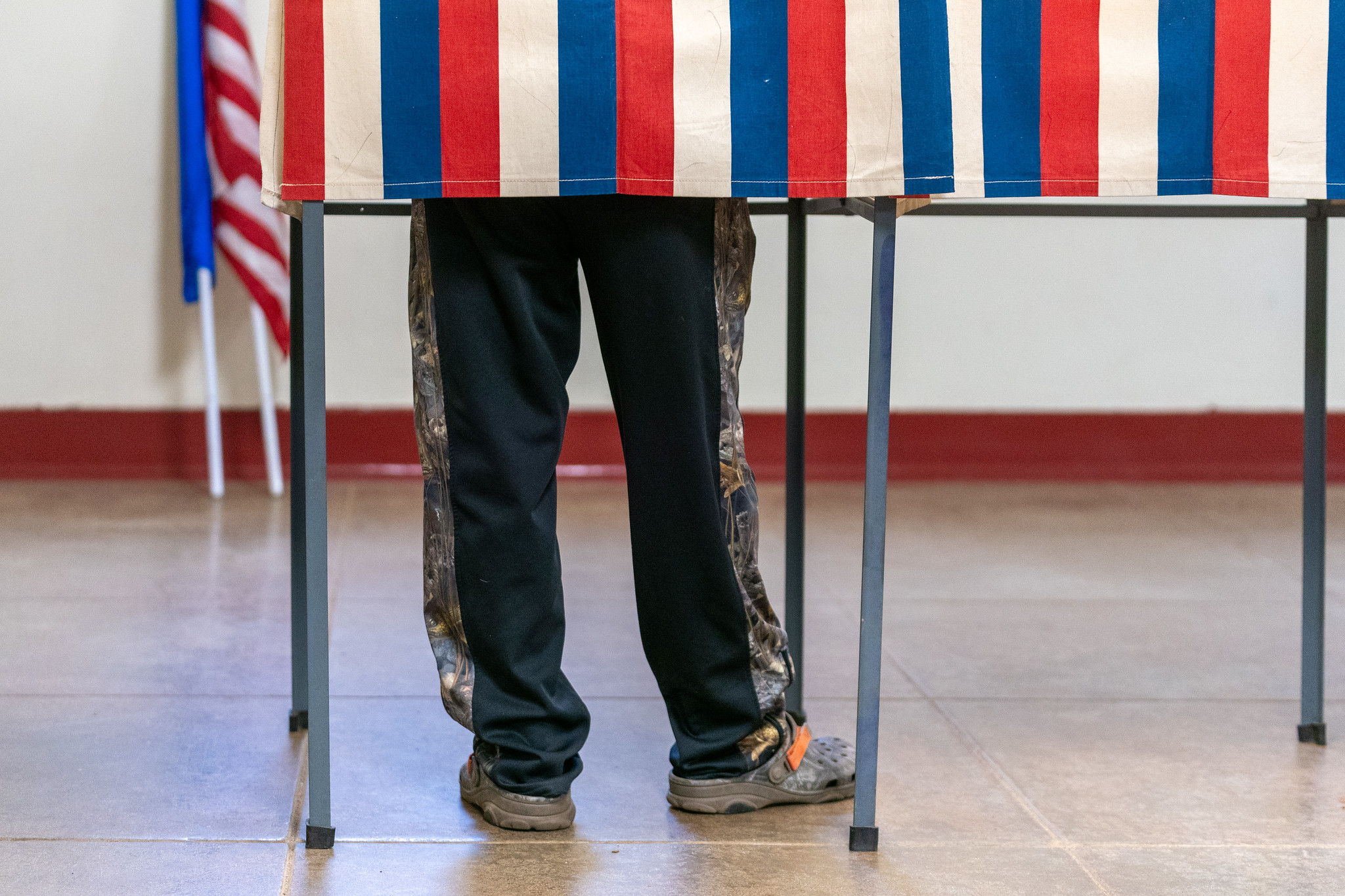 |
| Energy has been on the ballot for the midterms, but for environmental journalists, the story is not just how our energy choices determine near-term impacts, but also the longer-term consequences. Photo: Lorie Shaull via Flickr Creative Commons (CC BY 2.0). |
Backgrounder Analysis: Energy on the Ballot
By Joseph A. Davis
For the U.S. midterms, the cost of living has been one of the very biggest issues. And with winter coming, the price of energy has been going unrelentingly up.
Not just Middle East oil. Also of natural gas, electricity and even diesel — which is raising the price of almost everything we consume.
The price of gasoline may have helped decide the midterm elections and control of Congress.
In big ways and small, we pay for the energy we use. And the energy choices we make.
Our energy choices are
setting the course of
our children’s futures.
Sure, energy has been on the ballot this November. But there’s way more to it than that. Our energy choices are setting the course of our children’s futures.
By choosing Donald Trump for president in 2024, Americans chose fossil fuels. Trump “digs” coal, oil and gas because those industries paid him hundreds of millions — public interest be damned.
But other energy choices are available to us as a society. They too were on the ballot this November. There is a fleet of publications like Canary Media covering them.
Heeding the vast energy story
We environmental journalists owe homage to Ida Tarbell, the first and maybe best U.S. energy journalist — who exposed the oil industry for what it is.
Today, more than a century later, the job has gotten far bigger and more complex. There are still good guys and bad guys. But the energy story itself, in megajoules alone, has gotten immensely vaster. The technologies have multiplied exponentially.
 |
Today, our energy choices are already having deadly consequences all over the world. Scientists estimate extreme heat, spurred by global warming and lately by El Niño, will cause an extra 450,000 heat deaths this year.
It is in the headlines right now — and lurking behind the midterm ballots. But there’s more to it than that.
Energy politics is real and serious as a heart attack, and, well, often corrupt, and we ought to write more about it because it has environmental consequences.
Even though many of us consider ourselves “environmental” journalists, we need to pay attention to energy — coal, oil and gas, as well as the many kinds of wind and solar, hydro, geothermal, batteries, tidal and nuclear. Not to mention data centers.
It’s relevant to the environmental beat that Trump solicited campaign cash from energy execs before the 2024 election and then killed the rules that protect people’s health from energy pollution. Or that Trump backer Harold Hamm got the loot, er, concession to develop Venezuela’s captured oil.
Environmental reporters are used to writing about renewables. Trump’s expensive campaign against “windmills” is solely based on his spiteful resentment of turbines spoiling the view at his Scottish golf club.
Is this how we want to make energy policy? Even Texas is big on wind energy.
But it’s Trump’s vendetta against climate change action that will have even broader impacts. Under Trump, the United States has become the only nation on the planet to drop out of the climate treaty. Even if it is toothless.
His oil-industry backers mostly like that. But since the United States is one of the largest greenhouse gas emitters on the planet, it will have harmful consequences for much of humankind. Not that the climate talks haven’t been co-opted by the fossil industry anyway,
A coherent climate change program?
Journalists may well ask what will happen after the 2026 midterm elections, say, if Democrats win one or both chambers of Congress with Trump in the White House for two more years. (And if the U.S. still has elections by then.) Do the Dems have a coherent and effective climate change program? (Asking for a friend.)
News agencies in the past have covered energy choices as a business story and little more. (Looking at you, Reuters.) Or simply as a competition among fuels and regions. There are whole newsletters just about the price of ethanol.
Meanwhile, farmworkers in California are collapsing from heat stroke. Older people are dying in apartments without air conditioning. People unable to pay electric bills are getting their utilities shut off.
Environmental journalists
can help ensure the
fuller story is told.
Environmental journalists can help ensure the fuller story is told.
This election season, we have seen plenty of politicians on both sides invoke nationalism in campaign ads and speeches. However messed up, the United States still has much to be proud of.
The country, for example, has come up with a new solar panel technology that is a lot more efficient at turning sunlight into kilowatts. A U.S. company has just hooked a next-generation geothermal installation up to the grid.
What politician is taking credit for that?
Trump has been telling us that the price of energy will go down right after the election. But as wildfires burn and people starve in Sudan, the price of energy is constantly going up and will keep doing so no matter who we elect. What program do the Democrats have for addressing that?
[Editor’s Note: For more on reporting on energy issues, visit our Topic on the Beat: Energy page, which has more than 40 Backgrounders, TipSheets, Toolboxes, Features and more, plus energy headlines from EJToday.]
Joseph A. Davis is a freelance writer/editor in Washington, D.C. who has been writing about the environment since 1976. He writes SEJournal Online's TipSheet, Reporter's Toolbox and Issue Backgrounder, and curates SEJ's weekday news headlines service EJToday and @EJTodayNews. Davis also directs SEJ's Freedom of Information Project and writes the WatchDog opinion column.
* From the weekly news magazine SEJournal Online, Vol. 11, No. 39. Content from each new issue of SEJournal Online is available to the public via the SEJournal Online main page. Subscribe to the e-newsletter here. And see past issues of the SEJournal archived here.
SEJ Publication Types:
Topics on the Beat:
Region:
Visibility: