


SEJournal Online is the digital news magazine of the Society of Environmental Journalists. Learn more about SEJournal Online, including submission, subscription and advertising information.
January 28, 2026
 |
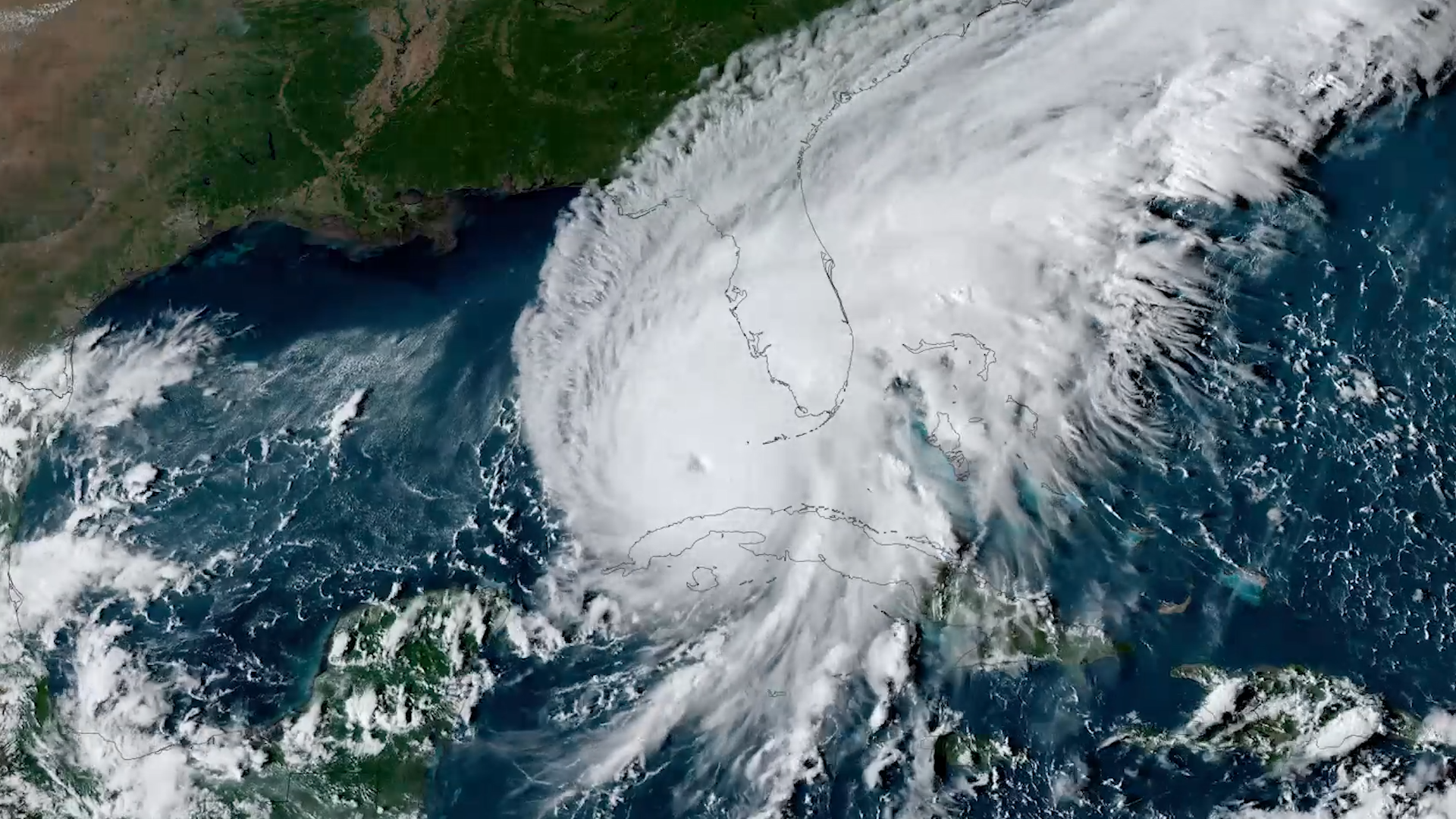 |
| A satellite image shows Hurricane Ian approaching Florida in late September 2022. Climate disaster data maintained by Climate Central put the cost of damage from the tropical cyclone at $122 billion, with 152 dead. Image: NOAA Satellites via Flickr Creative Commons (Public Domain). |
Reporter’s Toolbox: Trump Tries (and Fails) To Disappear Climate Disaster Data
By Joseph A. Davis
 |
Climate data can neither be created nor destroyed. It only changes form. It’s like another law of physics. Except that the Trump administration wants to repeal it.
But it was still news when the National Oceanic and Atmospheric Administration revealed in May 2025 that it would no longer maintain its yearly list of the worst U.S. climate disasters.
Every year, hurricanes, floods, hail, droughts, wildfires, heat waves and extreme weather cause damage that exceeds $1 billion for single disasters.
NOAA used to list them on its website, but no more. Apparently, the Trump administration thought that if it withheld the data, people would no longer be aware that their homes had been destroyed.
“In alignment with evolving priorities, statutory mandates, and staffing changes, NOAA’s National Centers for Environmental Information (NCEI) will no longer be updating the Billion Dollar Weather and Climate Disasters product,” the announcement read.
Multiple examples of blacked-out data
Trump’s blackout was thwarted when Climate Central, a nonprofit science think tank, used a Freedom of Information Act request to get the data from NOAA and republish it here.
The bad news is horrible: from 1980 to December 2025, the U.S. “has sustained 426 such events, with a total cost exceeding $3.1 trillion.”
Don’t tell.
It’s hardly the only example
where Trump 2.0 has blacked out
inconvenient environmental data
only to find it recovered and published.
It’s hardly the only example where Trump 2.0 has blacked out inconvenient environmental data only to find it recovered and published by some public-minded outlet.
You can find such public-service publishing at outlets like the Environmental Data & Governance Initiative. EDGI, as this coalition of academics and government exiles is known, has been rescuing data since Trump 1.0.
Rescuing an emissions inventory
Let’s look at another stream of climate data, what they used to call the U.S. Greenhouse Gas Inventory.
Run by the U.S. Environmental Protection Agency, it was meant originally to be a very complete annual accounting of U.S. emissions. Reporters loved it, because it shed light on individual emitters.
The EPA had published it since 1990. Originally, it met a requirement of the United Nations climate treaty — which Trump has again pulled the United States out of.
Trump’s EPA blacked out further data publication in 2025, when he returned to office. The last was published in 2024 for the data year 2022.
The green group, Environmental Defense Fund, FOIA’d the missing data. And got it. And published it. As data rescues go, it was a big deal.
Suppressing the climate assessment
Another example of Trump trying to black out climate information is his effort to stop the National Climate Assessment — which is actually required to be published every four years by law.
Scores of authors report from all over the nation about how climate change impacts different sectors of the United States.
Actually, fossil interests have been trying to suppress it since before Trump. The first assessment was completed in the final days of the Clinton administration, and published — but when George W. Bush came into office, he nonetheless tried (unsuccessfully) to unpublish it.
As to the Trump 2.0 administration,
it dismissed all 400 experts working
on the next assessment and removed
all past editions from federal websites.
As to the Trump 2.0 administration, it “dismissed” all 400 experts working on the next assessment and removed all past editions from federal websites.
His own denialist advisers said they would do it instead. But they haven’t. There is still a chance that real volunteer experts will do it.
In the meantime, today, all editions are online — thanks again to private sector rescuers.
So getting climate data from the Trump 2.0 administration will be hard. To help, here’s a tracker of all the environmental rules and data they have so far suppressed.
[Editor’s Note: For more on climate change, disasters and data, visit our Topic on the Beat page on Disasters.]
Joseph A. Davis is a freelance writer/editor in Washington, D.C. who has been writing about the environment since 1976. He writes SEJournal Online's TipSheet, Reporter's Toolbox and Issue Backgrounder, and curates SEJ's weekday news headlines service EJToday and @EJTodayNews. Davis also directs SEJ's Freedom of Information Project and writes the WatchDog opinion column.
* From the weekly news magazine SEJournal Online, Vol. 11, No. 4. Content from each new issue of SEJournal Online is available to the public via the SEJournal Online main page. Subscribe to the e-newsletter here. And see past issues of the SEJournal archived here.
SEJ Publication Types:
Topics on the Beat:
Region:
Visibility: