


SEJournal Online is the digital news magazine of the Society of Environmental Journalists. Learn more about SEJournal Online, including submission, subscription and advertising information.
February 18, 2026
 |
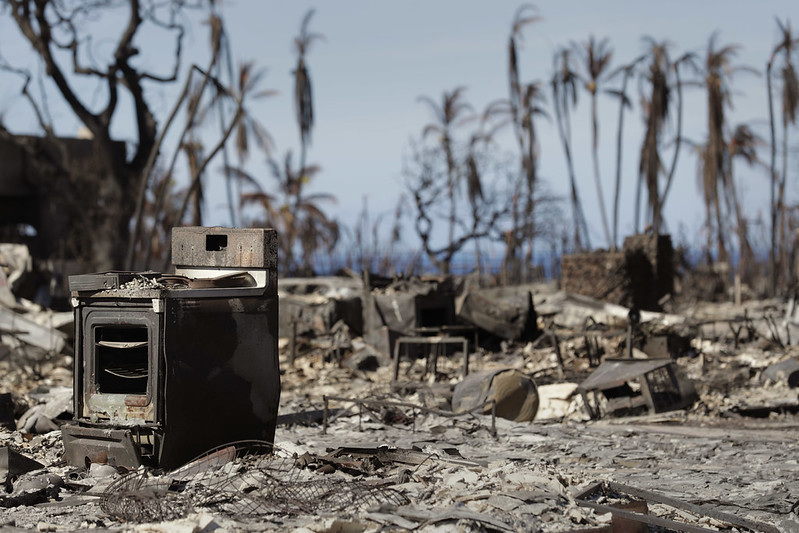 |
| A neighborhood destroyed by a wildfire in Lahaina, Hawaii, in August 2023. The author writes that such large-scale disasters are felt in communities for years. Photo: U.S. Customs and Border Protection/Glenn Fawcett via Flickr Creative Commons (United States government work). |
Feature: Beyond the Fires and Floods — Comprehensively Covering Disasters
By Colleen Hagerty
As climate change continues to dial up the frequency and intensity of extreme weather-related disasters like heat waves, wildfires and storms, reporters are increasingly finding themselves on the front lines of emergency situations.
Covering these events calls on journalists to make crucial decisions about their own lives and safety, all while trying to inform audiences about risks and available resources.
Even after the extreme weather has passed, the work of trying to make sense of what happened will continue.
Large-scale disasters such as Hurricane Helene and the Los Angeles wildfires are felt in communities for years to come, leaving lasting impacts on the economy, housing market and political landscape of an area, as well as the mental and physical health of survivors and first responders.
Often, reporters covering these stories will contend with some of these issues in their own lives, too.
Here’s how several journalists who are experienced in chronicling the many phases of extreme weather-related disasters approach this complicated coverage.
Consider the context
A hurricane spinning over the ocean is not a disaster — it’s when a storm reaches and tears at our built environment that it earns that distinction.
So, when covering extreme weather, it’s important to look at the many factors that contribute to the natural hazard turning into a disaster.
Climate change is often a key contributor these days, as we know it plays a role in everything from wetter, slower-moving storms to more persistent heatwaves.
But it’s important to consider the social and political landscape, too.
“These disasters that we experience through extreme weather don't happen in a vacuum,” environmental journalist Yessenia Funes says. “In my reporting, I'm constantly trying to make those connections, because our readers are often thinking more urgently about these other disasters like the cost of living [or] whether their safety is intact.”
To put that ethos into action, you can look back at the history of an area. Understanding its development can help explain why some neighborhoods are located in known flood plains or have fewer trees than other nearby communities.
You can also look at social vulnerabilities,
such as income levels, which impact
a person’s ability to endure and
recover from extreme weather.
You can also look at social vulnerabilities, such as income levels, which researchers have found impact a person’s ability to endure and recover from extreme weather.
Adam Mahoney, a climate and environment reporter at Capital B, says he utilizes census data to better understand the makeup of impacted areas when he is reporting remotely on a disaster. This information can help him narrow in on communities that might have been hit particularly hard or where residents might face additional hurdles due to cost or other social vulnerabilities in the aftermath.
Listen to locals
In addition to digging for answers about how the disaster unfolded, it’s important to stop and hear what concerns are being raised within the communities you’re covering. That means not only asking questions, but also listening to the questions residents are asking.
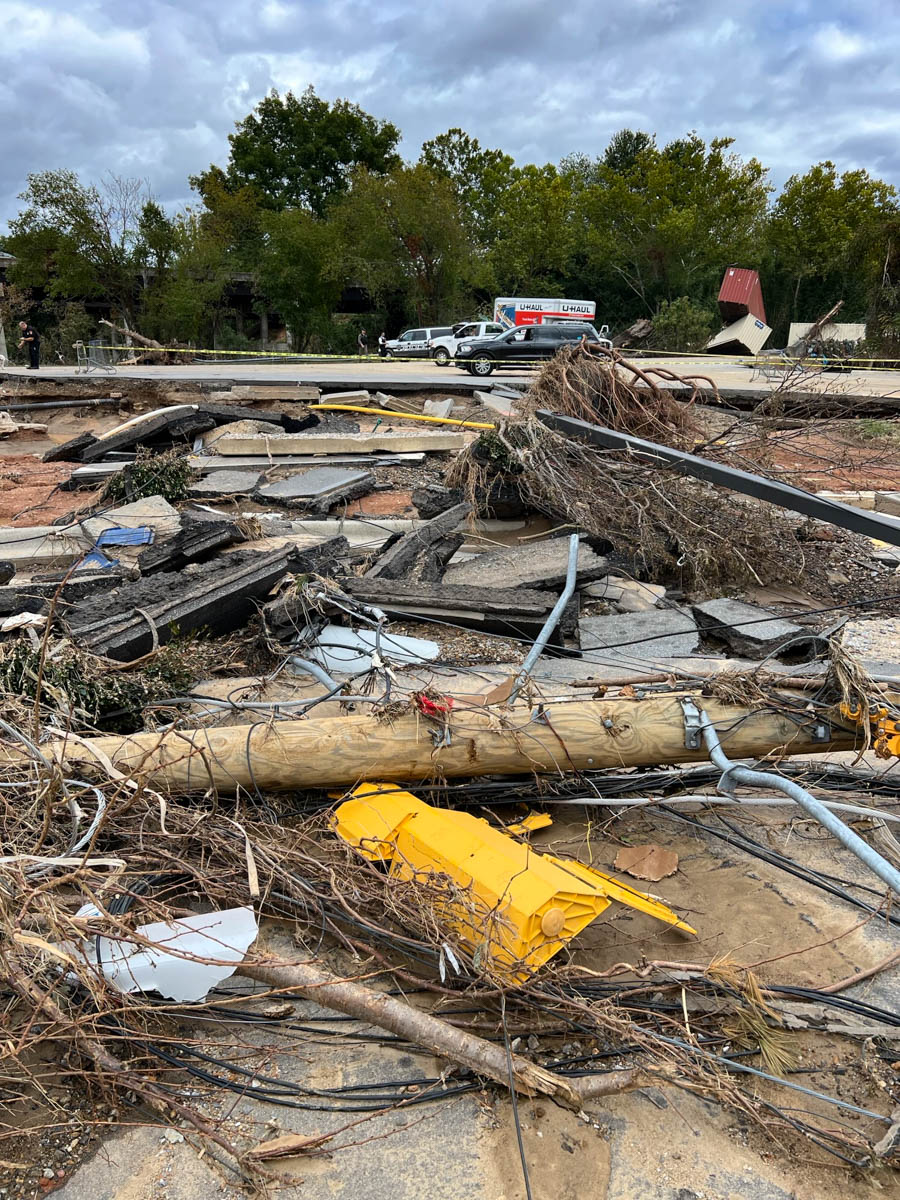 |
| Effects of 2024’s Hurricane Helene in North Carolina. Photo: NCDOTcommunications via Wikimedia Commons (Attribution 2.0 Generic). |
For example, disasters are often accompanied by interruptions in basic services like potable water or electricity, which can result in additional health hazards.
Are people getting sick from living in mold-infested houses? Are they worried about post-fire pollutants in the water or air? What is unique to this region that nonprofits or other outside aid might not be prepared to address?
“I let the reporting dictate what the story will be — and what the story that needs to be told is, in that moment,” Funes says.
This means keeping an open mind while on assignment, even if it requires you to shift the story you set out to tell.
If you’re not familiar with the area, Funes recommends tapping into organizations that are grounded in the community, such as grassroots or nonprofit groups, as well as local faith institutions.
For disasters that hit home, former Mendocino Voice publisher and Local News Go Bag Project founder Kate Maxwell says you might need to get creative about finding ways to keep the news coming without power or while being evacuated yourself.
But local journalists also play a particularly essential role in these times, with their familiarity being a key asset that can allow them to better identify and meet local information needs.
Maxwell remembers the frustration residents in her region felt when out-of-town journalists parachuted in after a wildfire and published high-profile articles with errors that were glaring to people who really know the area. She encourages national reporters to work with freelance colleagues who live in the impacted region or to partner with local newsrooms if possible.
Stay with the story
Zoya Teirstein, a senior staff writer at Grist, has made a habit of covering disasters after they happen.
While the initial landfall of a storm or flush of a fire might capture widespread headlines, she finds that it’s just as important to pay attention to the inequities and issues that arise months or even years later. Particularly as local newsrooms continue to shutter across the United States, these challenges can go uncovered as national outlets move on to the latest disasters.
Mahoney says he also tries to stay in touch with sources long after disasters. He believes this can be a reciprocal relationship — not only is he open and eager to hear any potential ideas for coverage, but his reporting can also help illuminate challenges in the community or direct disaster survivors to much-needed aid.
Mahoney will keep the door open by telling sources, “If I am missing something your experience is highlighting, don't hesitate to reach out.”
“Folks are living with the aftermath potentially for the rest of their lives,” Mahoney says, so this approach shows your sources that you aren’t just tapping into their trauma for some one-time quotes, but that you’re dedicated to sticking with them and their neighbors to tell the bigger-picture story.
Show up as yourself and for yourself
Disasters are often all-encompassing, requiring every journalist in a newsroom to drop their work and dive into the coverage. Even so, it’s important to not lose sight of yourself.
“The work isn’t about us, but we need to be mindful of how we can nurture ourselves to keep showing up,” says Funes, who works on the C.A.R.E.S. Media Initiative, which aims to provide mental health support to environmental and climate journalists.
This includes preparing yourself practically. Trying to help newsrooms and journalists think through their disaster plans ahead of time is part of Maxwell’s goal with the News Go Bag Project, which includes additional advice on safety and best practices for reporters on this beat.
“The best way to be able to do all this great coverage that we're talking about is really by prioritizing your own safety first, because I've seen reporters go out into a fire and have to be rescued,” Maxwell says.
Mahoney says it’s worth making sure you always have a valid press pass ready; Teirstein says she always rents a car with four-wheel drive, packs power bars and puts electronics in plastic bags so they don’t get wet.
Freelancers should talk to their editors during the commissioning process about a safety plan, which might include getting access to outlet-owned personal protective equipment or scheduling regular check-ins.
Showing up as yourself and for yourself
also means allowing yourself to feel
saddened, stressed, angry or
anything else that comes up.
Showing up as yourself and for yourself also means allowing yourself to feel saddened, stressed, angry or anything else that comes up in response to what you’re seeing and hearing. Funes believes this can strengthen trust with community members, as it reminds them that journalists are people, too, and not “robots.”
And when it starts to become too much, it can help to simply pause and take a deep breath, have a friend ready to receive your calls, or go outside and “touch grass, as the kids say,” which is Mahoney’s preferred way to decompress.
If you find yourself struggling, don’t hesitate to seek professional help. And don’t be afraid to step away from your work.
“Pacing yourself is something to think about,” Maxwell says. “Figure out for the long term what the limits and boundaries are that you're going to try and set, because I think it can feel like there are 100 million stories and you could keep covering them forever.”
[Editor’s Note: Material for this story was drawn from a panel moderated by Hagerty at the Society of Environmental Journalists’ annual conference in Tempe, Arizona, in April 2025, whose sponsors are listed here. And read a short write-up from SEJournal’s student newsroom coverage. For more on this topic, see our Topic on the Beat: Disasters page, with more than 40 SEJournal stories and the latest disaster-related headlines from EJToday.]
Colleen Hagerty is an award-winning journalist specializing in covering extreme weather events and disasters. She's reported extensively on policies, key players and impacted communities in this space for outlets including BBC News, The New York Times, Rolling Stone and National Geographic. She also publishes a newsletter about disasters called My World's on Fire, which Covering Climate Now selected as a newsletter finalist in its 2022 Journalism Awards.
* From the weekly news magazine SEJournal Online, Vol. 11, No. 7. Content from each new issue of SEJournal Online is available to the public via the SEJournal Online main page. Subscribe to the e-newsletter here. And see past issues of the SEJournal archived here.
SEJ Publication Types:
Topics on the Beat:
Visibility: