




SEJournal Online is the digital news magazine of the Society of Environmental Journalists. Learn more about SEJournal Online, including submission, subscription and advertising information.
March 4, 2026
 |
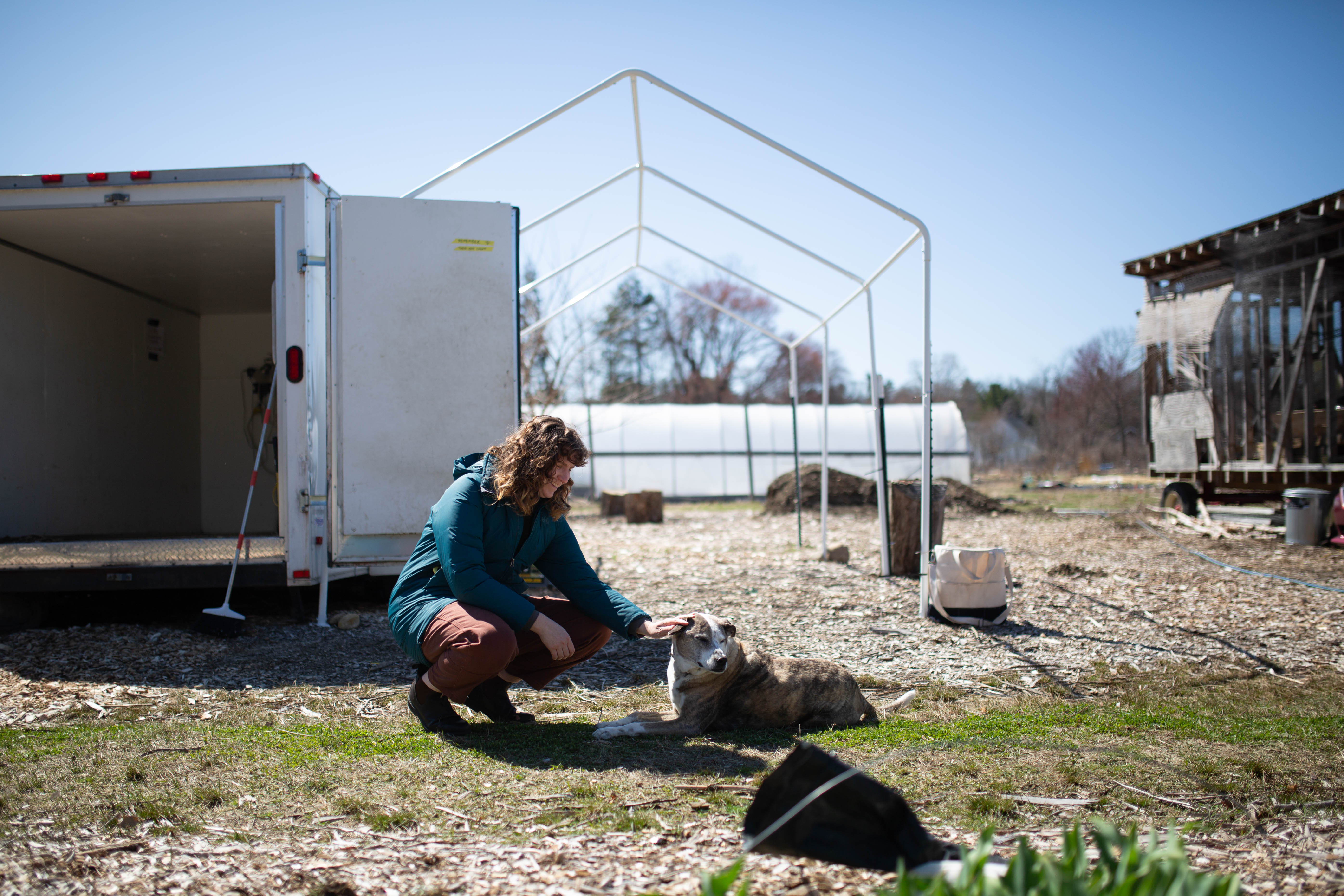 |
| The author in the field, reporting on river flooding at the Northampton Community Farm in Florence, Massachusetts. Photo: Emily Glick. |
Freelance Files: Making the Transition to Journalism From the Nonprofit World
By Marigo Farr
In the spring of 2021, after a 10-year career in the nonprofit sector doing advocacy on a range of social justice issues, I decided I wanted to be a journalist.
I was shocked it hadn’t occurred to me sooner: I’d always loved writing, and both my mother and grandfather were journalists.
I wanted a press badge, like my
grandfather’s worn cardboard one
that had been handed down to me.
What excited me about leaving advocacy work — and instead writing about it — was the idea that I’d be part of a trade. I wanted a press badge, like my grandfather’s worn cardboard one that had been handed down to me.
But while I was a confident writer of poetry and policy papers, there was one glaring thing I was missing: journalism clips.
I’d never written for my high school or college papers. I had a sense of what went into writing an article, but had never tried it myself. And when I chatted with a few journalist peers, they all said the same thing: “Try your hand at writing. Get something out there. Get clips.”
And so, I did. And I’m happy to share the journey with you. Here are the strategies, large and small, that I employed toward becoming a journalist.
Start with a welcoming, small-scale publication
For my first-ever clip, I reached out to the Kingston Wire, a news site in Kingston, New York, near where I’d gone to college.
I figured a small pub might be hungry for stories, and I was happy to write for free to get a few clips in the bag.
I pitched a story about the community fridges that had sprung up during COVID. Voilà, I had my first clip.
I don’t recommend making a habit of writing for free, but I did it once so that I had something to work off of.
Consider graduate school
Most of the journalist peers I talked to tried to dissuade me from going. They said that the job market was difficult enough and the pay was low enough that you couldn’t be sure you’d be able to pay back student loans upon graduating.
But I was lucky to have family support to pay for it. (I know now that paying back loans would be nearly impossible on the income I’ve been able to generate from journalism, so I understand the warning I was given.)
I felt I needed the training, mentorship
and connections that were basically
guaranteed by going to school.
I felt I needed the training, mentorship and connections that were basically guaranteed by going to school. I went to Northeastern University and received a significant academic scholarship.
Here’s what I gained by going:
- Formal training. I really benefited from coursework where I learned the nuts and bolts: What’s an inverted triangle? What’s a nut graf? How do you properly attribute a quote to a source? I also benefited from class discussion about ethics, trauma-informed journalism and understanding how my own identities (white, queer, Jewish, millennial, etc.) impacted who I was as a journalist. All of the rich philosophical conversations about journalism that my peers and professors were a part of would have been hard to come by if I hadn’t gone to school.
- Mentorship. My professors served as editors and guides. They helped me figure out what kind of journalist I wanted to be. They encouraged me to explore multimedia stories but also to stay true to what I was most passionate about, which was writing. They helped me put together a website, they edited my resumes and they were always available when I was looking for advice.
- Connections. If your relationship with your professors and department is strong, you’ve basically tapped into a pipeline for future work. My professors would hear about small writing gigs from people they knew in other departments, or in the industry at large, and pass my name along. After I graduated, I even got an adjunct teaching gig in the journalism school.
Now, if I ever want a more direct contact at a publication, my first stop is to see if one of my former professors knows someone there.
Network actively
As with any industry, networking is critical. Here are a few strategies I’ve used for building and maintaining professional connections:
- Make a networking spreadsheet. When I meet someone in the industry, whether it’s a professor, an editor or a newer writer like myself, I log it. I have a spreadsheet where I include name, place of work, email and notes about my interaction with them, so I remember the context of meeting them. I return to this spreadsheet when I’m looking for advice or when I’m looking for job opportunities.
- Stay in touch. For this, the above spreadsheet comes in handy. The people that I note as being high-priority connections — people who know my work well and who will advocate for me — I send emails to every once in a while, sharing what I’m up to and asking them to think of me if they hear of fellowships, pitching opportunities or full-time jobs.
More than once, I’ve emailed all my close professors with my resume and a reminder of the work I do in the world when I’ve been looking for opportunities. You never know when something might come across their desk.
Bonus tips
A few more strategies that helped me through my career transition:
- Explore memberships. Join different kinds of journalist associations and plug in. I am a member of the Trans Journalists Association and the Society of Freelance Journalists. I’ve received helpful tips about freelancing from people in both of those associations’ Slack channels.
- Attend conferences. I plan on attending the Institute for Independent Journalists’ 2026 Freelance Journalism Conference, which is happening online in March.
- Pitch far and wide. Dream up story ideas based on topics you’re passionate about or something you find in the local paper that you want to expand on. And don’t let perfect be the enemy of the good in terms of pitching. Just start!
- Maintain relationships with editors. Don’t wait for them to think of you for future stories. Put story ideas in front of them!
- Look for gigs to support freelance work. I worked as an adjunct in the journalism school at Northeastern University, which provided more predictable income (at least over the course of a few months). I also got a part-time editing job through the university.
Transitioning from the nonprofit sector to journalism required an investment in skill-building and new professional connections. But it wasn’t as if I was starting from scratch.
With my experience as a community organizer, I knew how to connect with people — a critical part of the reporting process. And I had a fair amount of research and writing experience under my belt from producing policy reports on a range of topics, such as renewable energy, which I now cover as a journalist.
If you’re transitioning to journalism, it’s important to highlight your transferable skills. Make sure you advertise them: whether on your website, in your cover letter or in a job interview.
Marigo Farr writes about environment, community resilience and LGBTQ+ issues for a range of outlets, including National Wildlife Magazine, Sierra, Nieman Reports and CommonWealth Beacon. They hold a master’s degree in media innovation from Northeastern University and have completed fellowships at Grist and Sierra. Farr came to journalism after working on policy in environmental and food justice, housing, municipal budgets and health care.
* From the weekly news magazine SEJournal Online, Vol. 11, No. 9. Content from each new issue of SEJournal Online is available to the public via the SEJournal Online main page. Subscribe to the e-newsletter here. And see past issues of the SEJournal archived here.
SEJ Publication Types:
Topics on the Beat:
Region:
Visibility: